Sock Skating Rinks: What They Are
Sock skating rinks let visitors glide on synthetic ice in just their socks — no skates, no cold. Here's how the surface works and where to find one.
USA Skating Rinks Editorial Team
Updated May 29, 2026 · Editorial policy
In this guide
Scroll tables sideways to see all columns.
A sock skating rink is a recreational surface designed to mimic the glide of ice skating, except participants slide across it wearing only socks instead of skates. The rink itself is not frozen water — it is a hard synthetic panel system engineered to be slippery enough to emulate ice while remaining safe at room temperature. The activity has become a fixture at children’s museums, science centers, and family entertainment venues, especially during fall and winter seasons.
Unlike a traditional ice rink or roller rink, a sock skating rink requires no skates, no protective bladework, and no refrigeration plant. Visitors take off their shoes, put on a clean pair of socks, and step onto the surface to glide. For a broader look at conventional rinks, see the main skating rinks directory or browse regional listings such as roller rinks in Texas.
What the Surface Is Made Of
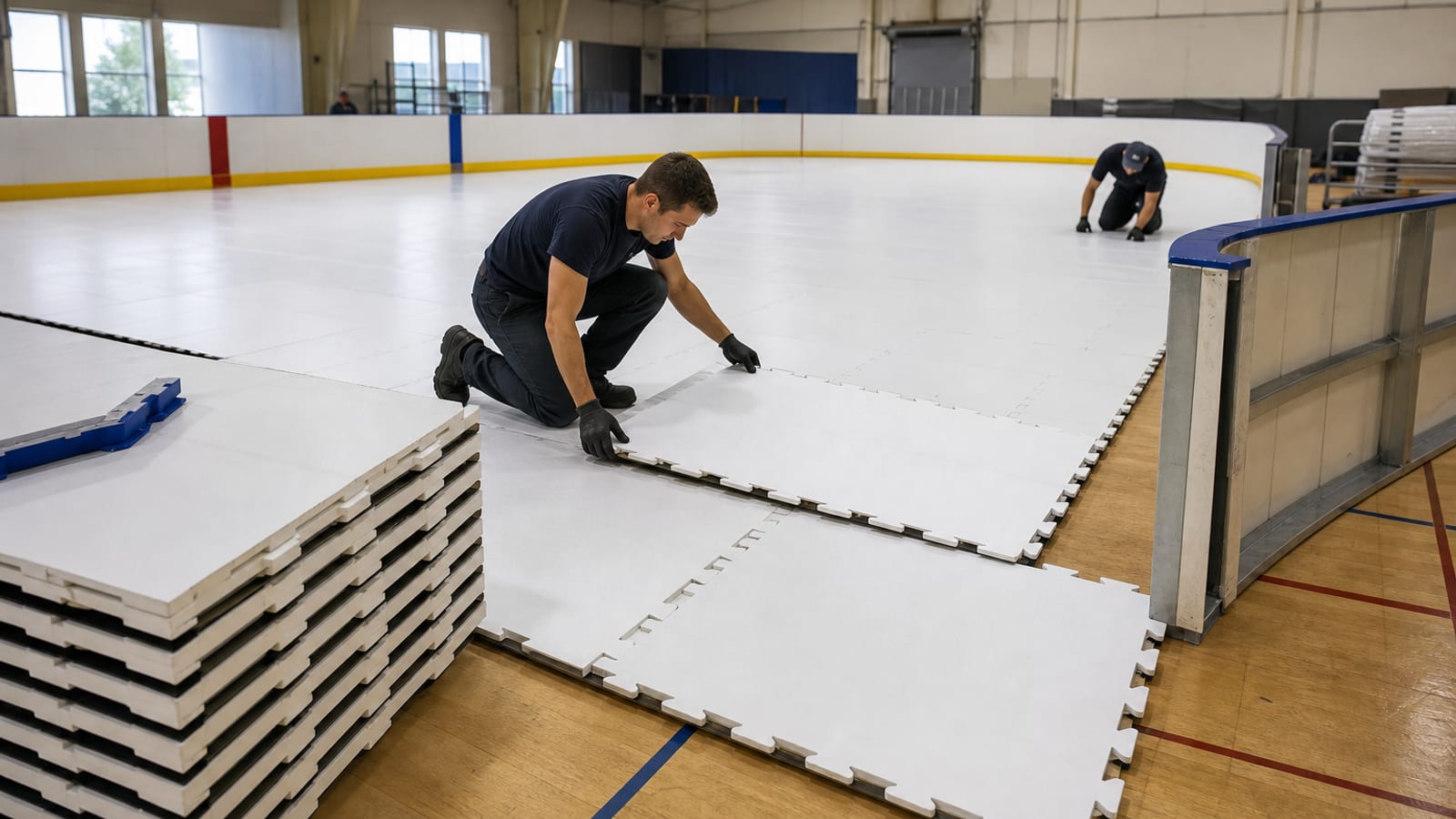
Sock skating rinks are built from synthetic ice panels — interlocking tiles, typically made of high-density polyethylene (HDPE), that connect via dovetail edges to form a continuous surface. PolyGlide Ice describes synthetic ice as “special white tiles or panels that can emulate the look of an ice rink,” noting that the best material is high-density polyethylene engineered to last for years.
The same panels are used for actual blade skating in some installations; for sock skating, the surface is simply used barefoot-friendly with socks instead of skates. Liberty Science Center, which runs a sock skating rink on its second floor, describes its installation as “a high-tech synthetic polymer surface” that “isn’t made of real ice — but it is really slippery.”
How Sock Skating Differs From Ice or Roller Skating
| Feature | Sock Skating Rink | Ice Rink | Roller Rink |
|---|---|---|---|
| Surface | HDPE synthetic panels | Frozen water | Wood or polished concrete |
| Footwear | Socks only | Ice skates | Quad or inline skates |
| Refrigeration | None | Required | None |
| Year-round | Yes | Yes (indoor) / seasonal (outdoor) | Yes |
| Typical falls | Lower-impact | Hard ice | Hard floor |
Because the activity needs no skates or ice plant, sock rinks can operate any time of year and accommodate first-timers with no prior skating experience.
Where to Find Sock Skating Rinks
Sock rinks tend to appear in three settings:
- Children’s museums and science centers. Liberty Science Center in Jersey City installed a sock skating rink that proved popular enough to stay through the winter season. MOXI, The Wolf Museum of Exploration + Innovation in Santa Barbara, runs a rooftop “Seaside Sock Skating” exhibit during winter months.
- Family entertainment centers. Trampoline parks and indoor play parks sometimes add a synthetic ice panel area alongside trampolines and climbing features as a seasonal attraction.
- Home installations. PolyGlide Ice notes that home starter kits can be built around as little as 32 square feet of synthetic panels.
What to Wear
Sock material matters more than most newcomers expect. Cotton and wool socks are the consensus recommendation:
- PolyGlide Ice states “wool and cotton socks work best” and specifically warns against socks with non-slip grippers on the sole, since they prevent gliding and cause stumbles.
- MOXI recommends cotton or natural fiber socks because they “slide the best,” and the museum sells socks at its store for visitors who arrive unprepared.
Clean socks are typically required by venues for hygiene reasons, and many sites sell branded socks at the entrance.
Safety and How It Feels
Sock skating is generally lower-impact than ice skating because there are no blades involved and falls happen at slower speeds, but the surface is still genuinely slippery. Global Synthetic Ice cautions that “the surface is just as slippery” as real ice and recommends beginners use the railing, bend their knees slightly, keep arm movement controlled, and learn to catch a fall with hands in front.
MOXI’s exhibit notes that participation involves acknowledged risk of falls and that visitors should “exercise caution and be respectful of other skaters.” Operators commonly post rules limiting running, tag, and aggressive sliding.
Why Venues Are Adding Them
For venue operators, the appeal is operational simplicity. A sock rink has:
- No refrigeration costs, since there is no ice to maintain
- No skate rental program to staff and sanitize
- Year-round usability indoors
- A low barrier to entry — guests who have never skated can participate immediately
Global Synthetic Ice describes the format as “a new hot trend in family entertainment and recreation,” with the activity also marketed as a balance and light-cardio workout suitable for a wide age range.
Frequently Asked Questions
Is a sock skating rink made of real ice?
No. It is made from interlocking synthetic ice panels, typically high-density polyethylene, that are engineered to be slippery without freezing. There is no refrigeration involved.
What kind of socks should you wear?
Plain cotton or wool socks slide best. Avoid athletic socks with grippers or non-slip soles on the bottom, since they defeat the purpose of the surface. Many venues sell socks on-site.
Is sock skating safer than ice skating?
Falls still happen, but there are no blades and speeds tend to be lower than on a refrigerated ice rink. Venues such as MOXI still treat it as an activity with assumed risk, so caution and railings are recommended for beginners.
Sources
- Sock Skating: Safe Fun For The Whole Family — PolyGlide Ice — sock material recommendations, HDPE panel construction, home starter kit footprint
- Liberty Science Center: Sock Skating Rink — synthetic polymer surface description and exhibit details
- Seaside Sock Skating — MOXI — artificial ice tile surface, cotton sock recommendation, rooftop exhibit rules
- A New Trend in Entertainment and Recreation: Sock Ice Skating — Global Synthetic Ice — Super-Glide synthetic ice, beginner safety guidance, trend framing