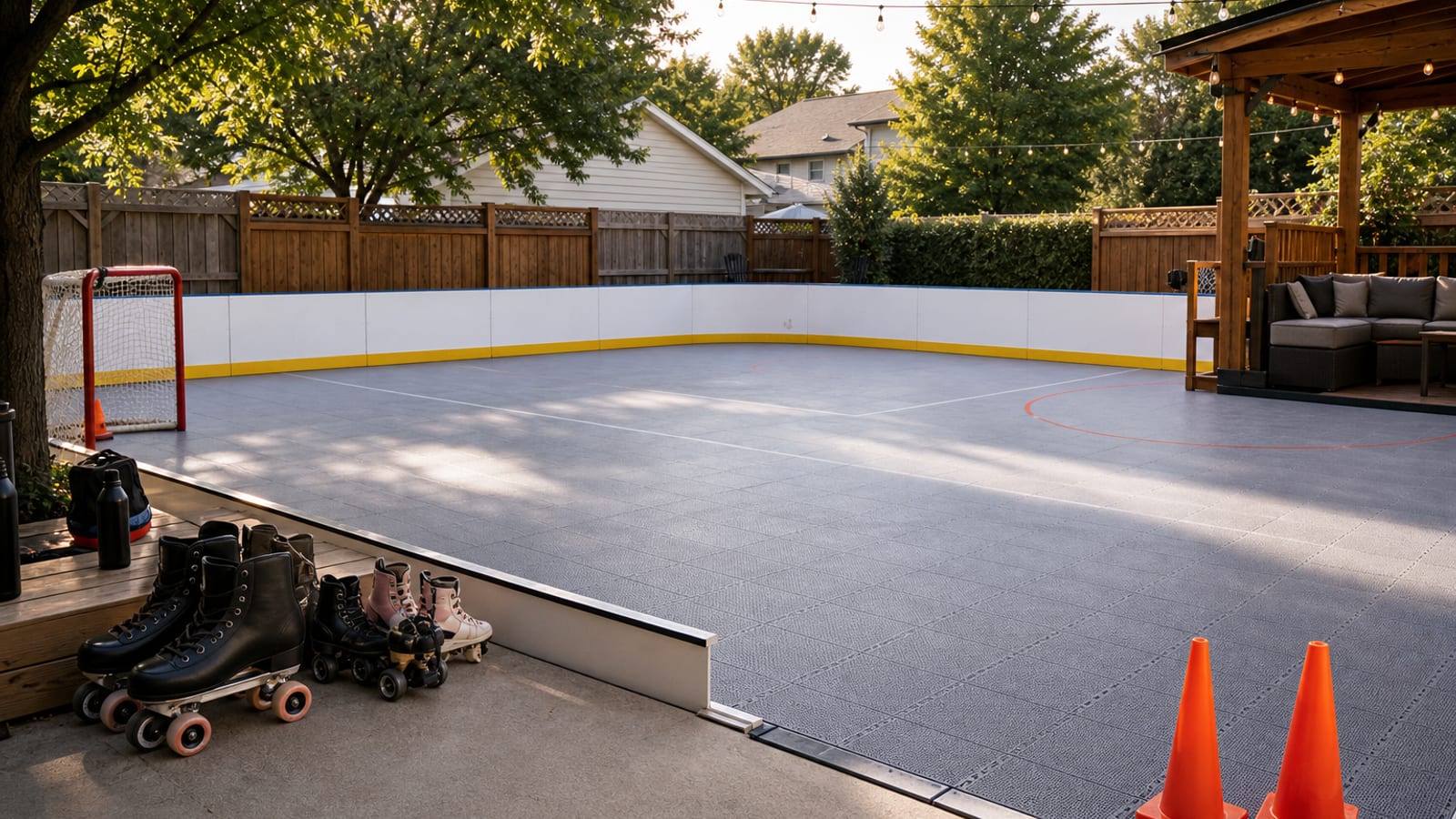
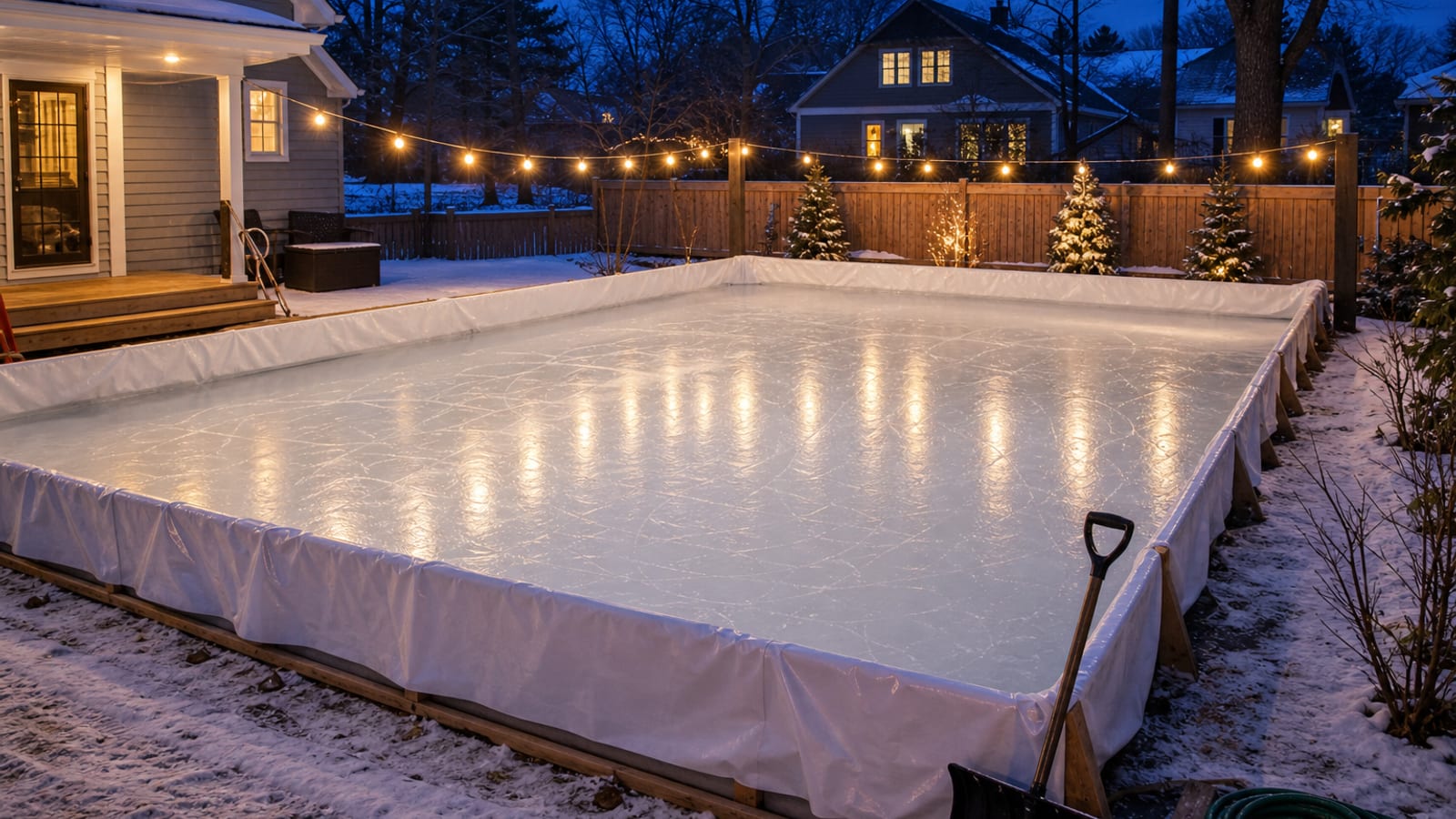
Backyard Ice Rink vs Roller Rink: Which Should You Build?
Compare backyard ice and roller rinks by weather, base, water, maintenance and full project costs, then choose the right planning guide.
USA Skating Rinks Editorial Team
Updated September 20, 2026 · Editorial policy
In this guide
Scroll tables sideways to see all columns.
Choose a backyard ice rink if you want to skate on blades and can support a seasonal frozen surface or a designed refrigeration system. Choose a roller rink if you want a wheeled-skating surface with a suitable base. The decision starts with the activity, site and maintenance you can support.
Neither a kit nor a set of tiles makes every yard suitable. Measure the space and ask the supplier to review the intended use before buying.
Compare the Two Projects
| Decision | Seasonal lined ice rink | Outdoor roller rink |
|---|---|---|
| Equipment | Ice skates | Quad or inline skates |
| Weather | Needs suitable freezing conditions | Needs a surface usable in the day’s weather |
| Site | Measured slope and a supported water-containing frame | A base approved for the selected skating surface |
| Water | Initial fill, upkeep and thaw drainage | Drainage and cleaning |
| Surface care | Ice assessment, snow removal and resurfacing | Inspecting surface condition, joints and debris |
| Off-season plan | Drainage, dismantling and storage as applicable | Ongoing outdoor care, or removal if designed to be portable |
| Main quote questions | Boards, supports, liner, water and installation | Base preparation, surface, drainage, edges and installation |
This table is a planning comparison. Actual requirements come from the system manufacturer and the installer who assesses the site.
If You Choose Ice, Start With Slope
Water settles level even when the ground does not. A lower corner therefore holds more water than the high end, changing what the frame must support.
Record elevation differences before choosing board height. NiceRink’s instructions specify different support arrangements for different depths. A board’s length, height and supported water depth are not interchangeable dimensions.
Use our home ice rink guide for a worked water-volume example and quote checklist, then confirm a design with the supplier. The liner buying guide explains the allowance around the footprint.
Do not schedule an opening based on a promised three- or four-day freeze. Weather, depth and construction affect the result; the completed ice needs assessment before use and after changing conditions. HockeyShot’s planning guidance explains the assumptions behind its freezing example.
If You Choose Roller, Start With the Base
Select a surface intended for your skate type and outdoor use. Ask the manufacturer to review the existing pad or proposed base before ordering tiles.
VersaCourt’s subsurface guidance distinguishes concrete, asphalt and an engineered alternative base system. A product approved over a prepared base should not be assumed to work directly on lawn or loose stone.
Its skating surface page describes indoor and outdoor applications. Drainage features do not establish that any wet surface is ready for skating or promise a fixed drying time.
Compare the surface choices in our backyard roller rink guide and ask for the current installation instructions for the product you select.
Compare Complete Quotes
Give each supplier the same dimensions and intended activity. Separate:
- Site preparation and drainage.
- The rink surface and any boards or edge treatment.
- Installation, transport and access costs.
- Water or electricity requirements.
- Routine maintenance and replacement items.
- Storage or removal costs where relevant.
For a refrigerated ice option, obtain a separate design and operating-cost estimate. For a roller surface, do not compare a tile-only price with a quote that includes a new pad.
If you mainly want occasional family outings, compare those complete costs with local public sessions before committing the space.
Frequently Asked Questions
Can a roller rink be used all year?
Outdoor use depends on weather and surface condition. Roller skating does not require frozen water, but rain, snow, ice or debris can still interrupt use.
Can I flood an existing roller surface in winter?
Ask both surface and rink-system suppliers. Do not assume that a tile, coating, foundation or warranty permits flooding and freezing.
Can skating tiles go straight on grass?
Only use a base explicitly supported by the chosen product’s instructions. Do not treat interlocking tiles as a way to skip base preparation.
Which option is cheaper?
Compare complete site-specific quotes. Existing infrastructure, slope, water, drainage and installation can matter more than the headline kit or tile price.
Sources and Review
Linked manufacturer guidance checked September 20, 2026. These are decision and budgeting questions, not construction specifications for an unassessed site.