Roller Skating Rink Insurance: Coverage & Costs
What roller skating rink insurance covers, typical policy limits, monthly cost ranges, and which carriers and trade-association programs serve the industry.
USA Skating Rinks Editorial Team
Updated May 29, 2026 · Editorial policy
In this guide
Scroll tables sideways to see all columns.
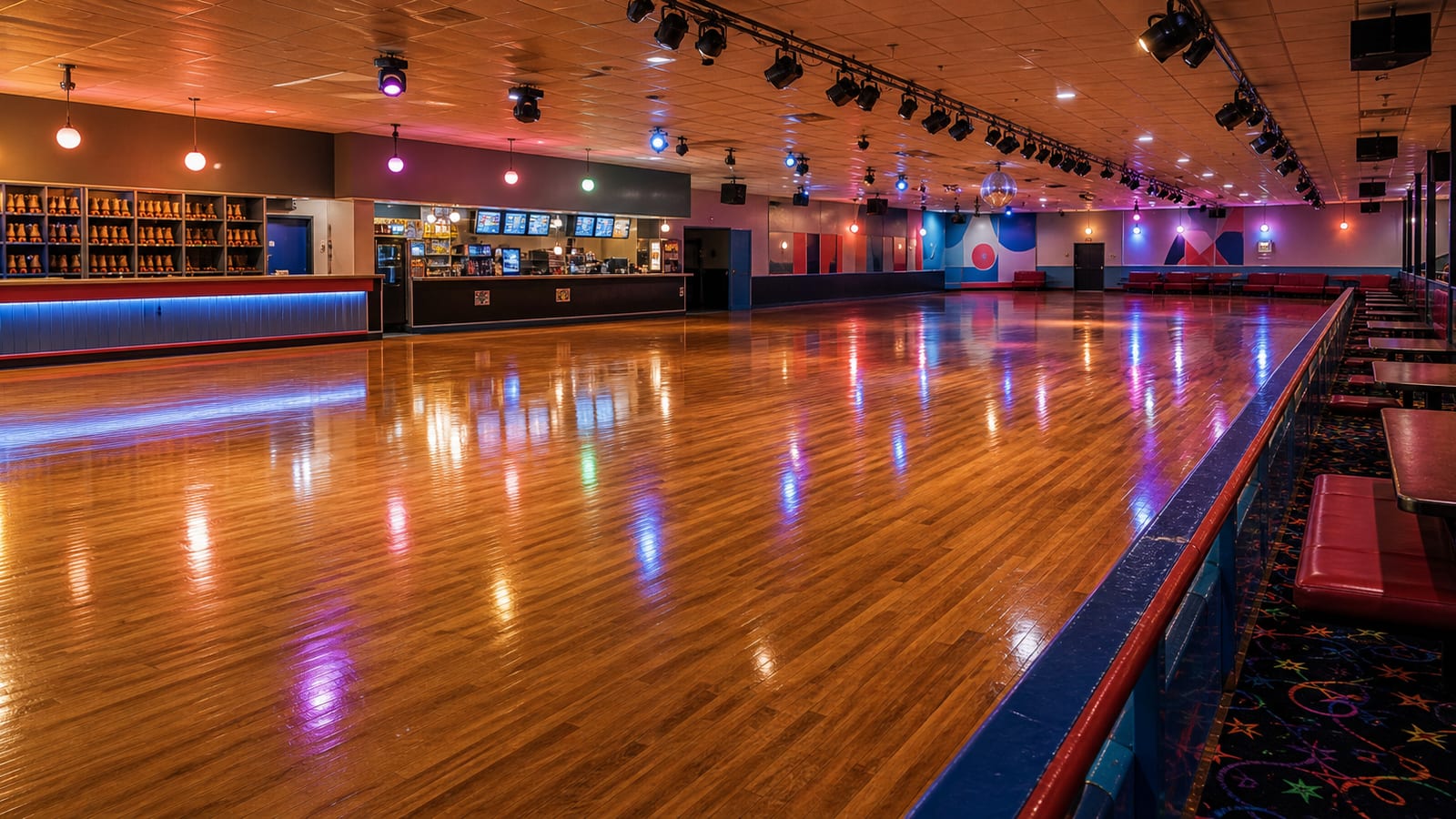
Running a roller skating rink means inviting hundreds of people onto a polished maple floor with wheels strapped to their feet. The premises liability exposure is real, and so is the property risk tied to sound systems, lighting rigs, rental skate inventory, and snack bars. Roller skating rink insurance is the bundle of policies that addresses those exposures — and the way it’s priced and packaged is shaped by a small number of specialty programs that dominate the industry.
This guide outlines the core coverages a rink should carry, typical limits available through specialty markets, what published cost ranges look like, and how the Roller Skating Association International (RSA) connects member operators to underwriters.
Core coverages a roller rink typically needs
Specialty programs that quote skating facilities generally package the following lines:
- General liability. Covers third-party bodily injury and property damage — most commonly slip-and-fall claims on the rink floor or in the lobby. Sadler Sports & Recreation Insurance writes occurrence-form general liability for rinks with limits ranging from $1,000,000 to $5,000,000, and offers an endorsement for athletic participant coverage so that skaters themselves are not excluded as participants.
- Commercial property. Protects the building (if owned) plus contents — sound equipment, lighting, rental skates, arcade games, concession equipment — against fire, theft, vandalism, and named perils.
- Workers’ compensation. Required in most states once a rink has employees. RSA members can access discounted workers’ compensation through the AmeriTrust Connect program.
- Accident (participant) medical. A no-fault medical benefit paid regardless of liability for skater injuries on premises. Sadler’s program offers accident medical benefits up to $25,000 with multiple deductible options and accidental death and dismemberment benefits up to $10,000.
- Business income / business interruption. Replaces lost revenue and covers continuing expenses if a covered loss (such as a fire) forces the rink to close temporarily.
Optional coverages worth quoting
Several add-ons show up routinely on rink policies because the operating model invites the exposure:
- Sexual abuse and molestation (SAM) coverage — important for any facility hosting youth birthday parties, lessons, or scout outings. Sadler lists it as an available option on its program.
- Hired and non-owned auto — for staff running errands or shuttling equipment in personal vehicles.
- Liquor liability — for rinks that serve alcohol at adult-night events.
- Employment practices liability (EPLI), cyber liability, employee dishonesty, and umbrella liability — all listed as recommended add-ons by industry brokers writing this class.
What roller skating rink insurance costs
Published pricing for this class is limited and varies heavily by state, payroll, attendance, and loss history. The most-cited public benchmark comes from generalliabilityinsure.com, which states that a standard $1,000,000 per-occurrence / $2,000,000 aggregate general liability policy for a small roller skating rink typically runs $67 to $99 per month. That figure is for general liability alone — property, workers’ comp, accident medical, and umbrella layers are priced separately and can multiply the total premium several times over for a mid-sized facility.
Factors that move the premium up or down include:
| Factor | Why it matters |
|---|---|
| Annual revenue / attendance | Higher exposure base = higher premium |
| Activities offered | Roller hockey, derby, and skate park features add risk |
| Claims history | Prior slip-and-fall or participant claims raise rates |
| Building ownership | Owning vs. leasing changes property needs |
| Alcohol service | Adds a liquor liability layer |
| Youth programs | May require SAM coverage and background-check protocols |
Operators should expect to provide payroll, gross receipts, square footage, and a description of programming when applying. K&K Insurance, a major leisure-and-entertainment underwriter, distributes a dedicated skating facilities application package for this purpose.
The RSA member route
The Roller Skating Association International is the trade body for rink owners and lists a roster of insurance suppliers in its RSM (Roller Skating Manufacturers and Suppliers) category. The brokers and agencies currently published on the RSA supplier directory include:
- JBL Trinity Group Ltd. / World (Atlantic Highlands, NJ) — operator of the long-running Roller Skating Rink Insurance Program reachable at 1-800-925-RINK.
- Ameritrust Insurance Group — workers’ compensation discounts for RSA members.
- Hanasab Insurance Services Inc. (Los Angeles, CA).
- American Insurance Services (Rice Lake, WI) — focused on Midwest rinks.
- PointeNorth Insurance Group (Birmingham, AL).
RSA also markets a member health insurance benefit through Meridio. The association reports a membership base of more than 1,000 rink owners and operators worldwide, which gives these program markets enough volume to negotiate facility-specific terms with carriers.
How to shop a renewal
- Pull a current loss run from the incumbent carrier — at least three years.
- Update the exposure schedule — gross receipts, payroll by class, square footage, programming calendar (open skate, lessons, hockey, derby, private events).
- Document risk controls — floor inspection logs, skate maintenance records, employee training, incident reporting procedures, and any waiver language used at admission.
- Get quotes from at least two specialty markets — for example, a Sadler proposal alongside a JBL Trinity / RSA-network proposal — so the terms (athletic participant coverage, SAM sublimit, accident medical benefits) can be compared line by line.
- Review the participant waiver. Some states limit the enforceability of pre-injury releases; in others (such as Florida under Fla. Stat. § 768.395 governing roller skating rink safety) statutory duties define what the operator must do and post.
Operators researching the broader skating landscape can browse the skating rinks directory or jump straight to regional listings such as roller rinks in Ohio to see how facilities of different scales position themselves.
FAQ
Is roller skating rink insurance legally required?
General liability itself is not mandated by federal law, but most commercial leases, municipal operating permits, and state workers’ compensation statutes effectively require coverage. States with skating-rink-specific safety statutes (Florida is one example) impose duties whose breach can drive liability claims.
Does general liability cover skater-on-skater collisions?
Coverage hinges on whether the policy excludes athletic participants. Standard general liability often excludes participant injury; specialty rink programs such as Sadler’s add an athletic-participants endorsement so collisions and skater falls are covered.
What is “accident medical” and why do rinks buy it?
Accident medical (sometimes called participant accident) pays a capped medical benefit to an injured skater regardless of fault. It is bought because small medical bills paid quickly often head off larger liability claims. Sadler publishes accident medical limits up to $25,000 per claim on its rink program.
Sources
- Roller Skating Rink Insurance — generalliabilityinsure.com — $67–$99/month benchmark for $1M/$2M GL; pricing factors.
- Sadler Sports — Roller Skating Rink Insurance Program — GL limits $1M–$5M, athletic participant endorsement, SAM option, accident medical up to $25,000, AD&D up to $10,000.
- RSA Insurance Suppliers Directory — list of brokers serving RSA members (JBL Trinity, Ameritrust, Hanasab, American Insurance Services, PointeNorth).
- Roller Skating Association — About — RSA trade-association role and membership scale.
- The Roller Skating Rink Insurance Program (JBL Trinity) — program scope including roller hockey, special events, and member support.
- K&K Insurance — Skating Facilities Application Package (PDF) — confirms K&K writes the skating facilities class and provides the dedicated application package.
- Florida Statute § 768.395 — Roller Skating Rink Safety — example of state-specific operator duties relevant to underwriting.