Roller Skating Rink Floors: Types, Costs & Maintenance
Compare maple, coated concrete and synthetic roller rink floors, including cost ranges, skating feel, maintenance needs and cited industry sources.
USA Skating Rinks Editorial Team
Updated May 29, 2026 · Editorial policy
In this guide
Scroll tables sideways to see all columns.
The surface under your wheels shapes almost everything about a session — grip, glide, fall impact, wheel choice, and the long-term economics of running the building. Most commercial roller skating rink floors fall into one of three families: hardwood (typically maple), coated concrete, and synthetic tile or sheet systems. Each has a distinct feel, a distinct price tag, and a distinct maintenance routine.
This guide breaks down how the main floor types compare, what they actually cost, and how rink operators keep them skateable year after year. For a broader look at where to skate, see the main skating rinks directory or browse Illinois roller rinks.
The Three Main Roller Rink Floor Types
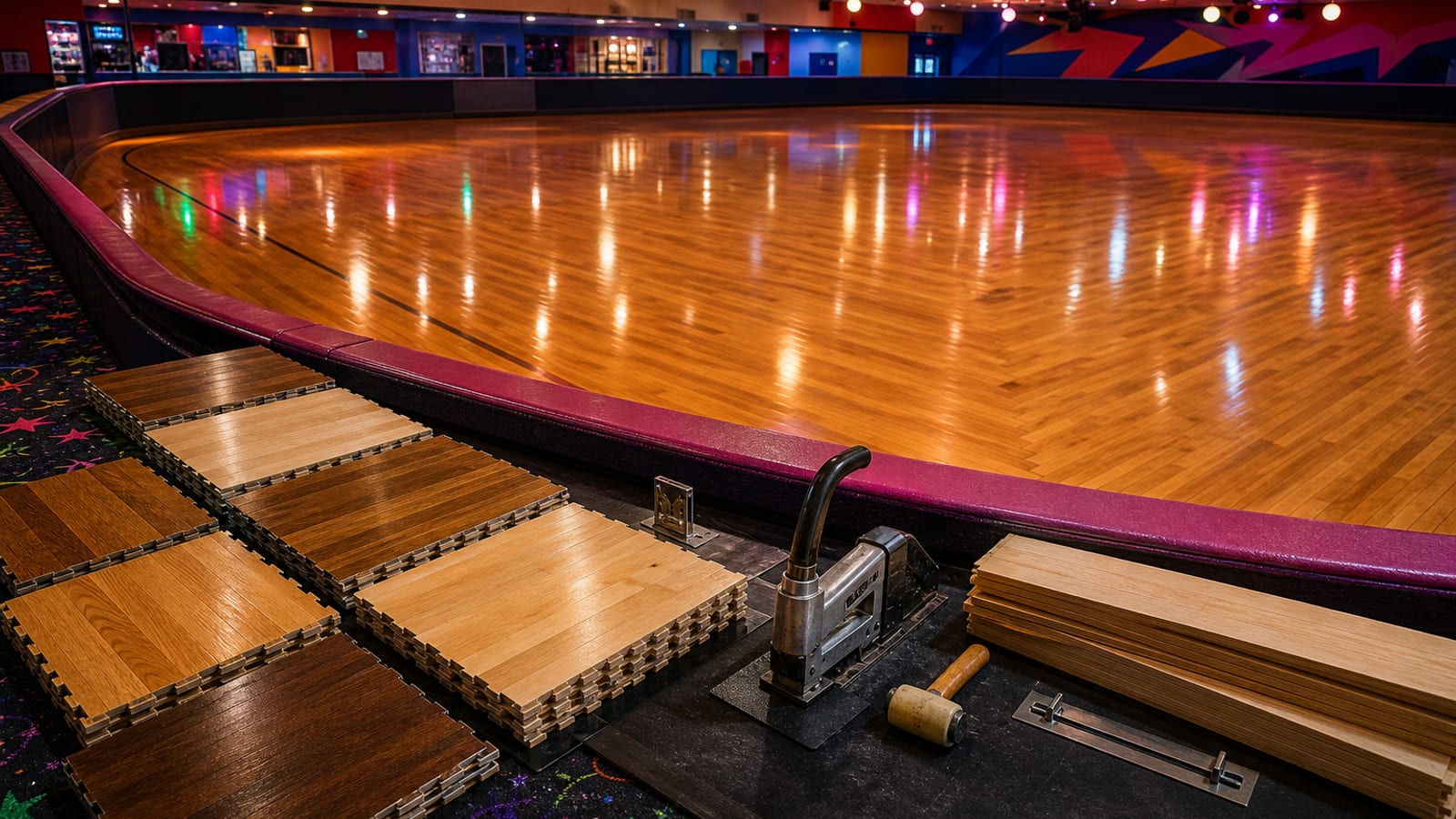
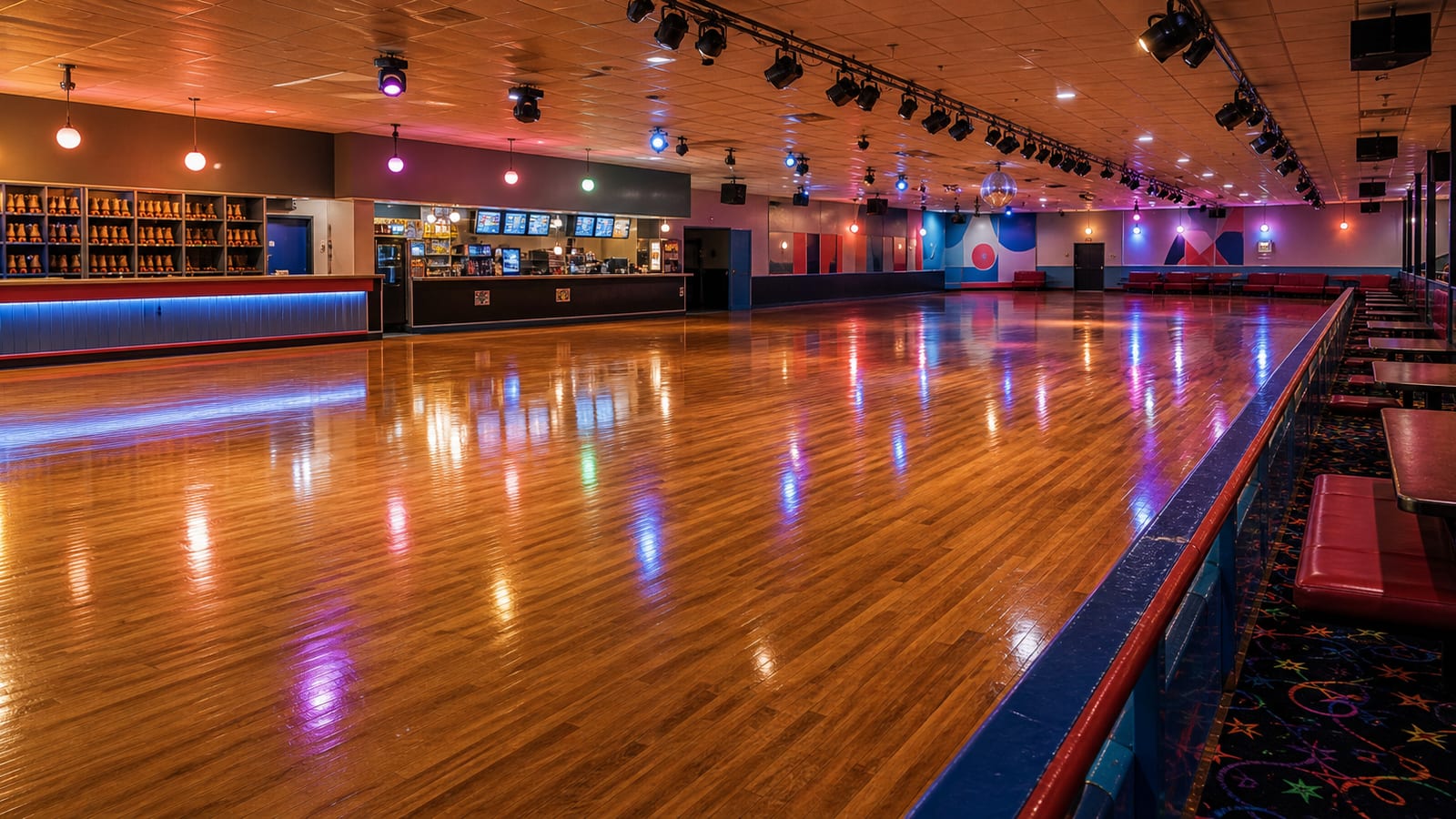
Maple hardwood is the traditional choice and is often described as the gold standard for indoor rinks. The surface is slightly softer than concrete, which means falls hurt less and the floor offers more natural grip — especially attractive to artistic, dance, and rhythm skaters.
Concrete is harder, slicker, and cheaper to install. Coated concrete is a favorite of jam skaters and speed skaters because the slipperier surface makes spins and power moves easier. The trade-off is that falls are harder, and the slab itself does nothing for traction until it’s coated.
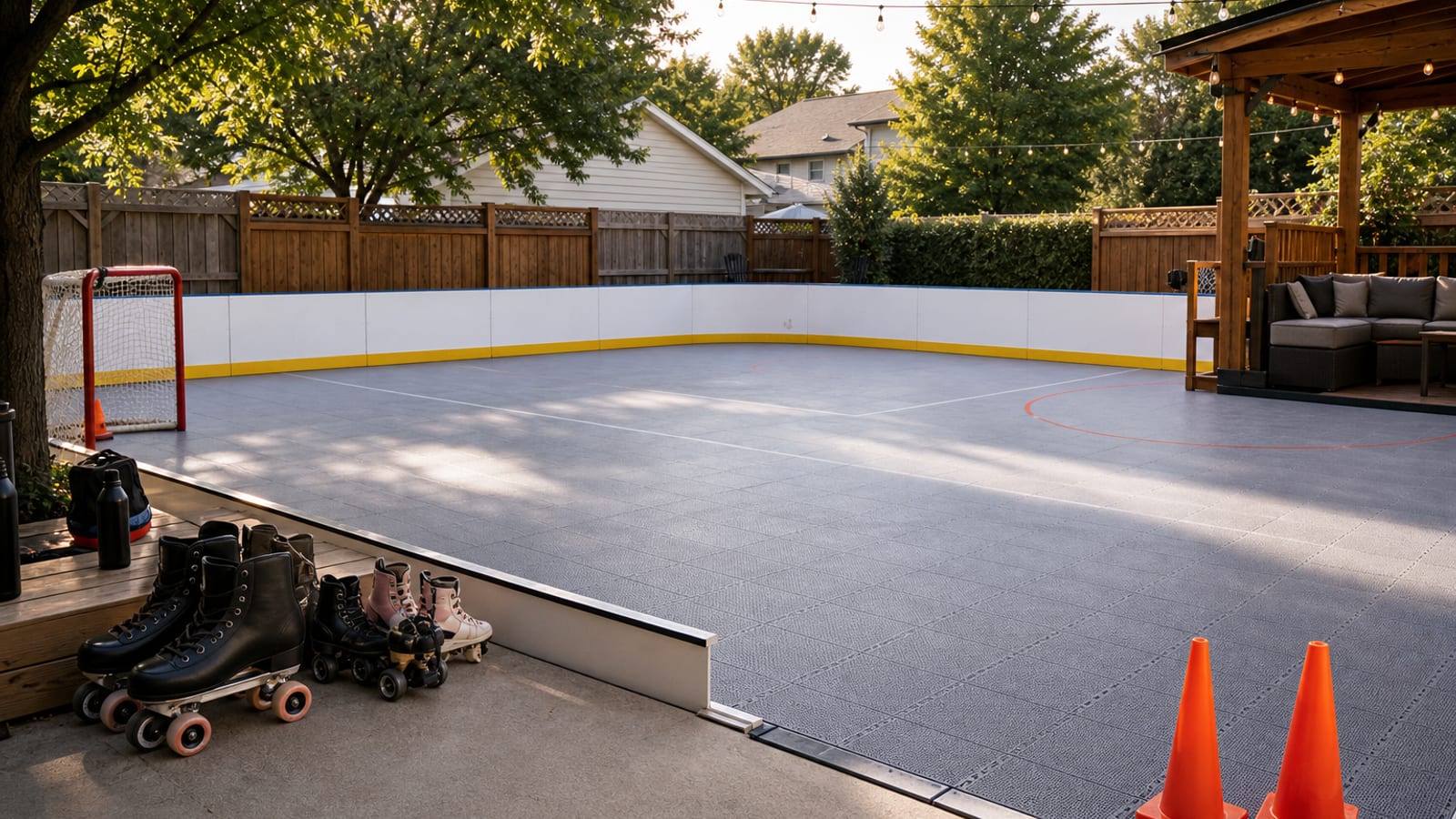
Synthetic systems — modular plastic tiles, polyurethane sheets, and similar products — sit between the two on cost and feel. They install faster than hardwood, can be laid over existing slabs, and are increasingly common in pop-up and smaller community rinks.
There are also hybrid setups, such as particle board over a subfloor, which behaves more like wood than concrete underfoot.
How Floor Type Affects Skating
The floor doesn’t just determine comfort — it dictates wheel choice and skating style. According to Southeastern Skate Supply’s technical notes, concrete and particle board floors are always coated, while wood floors may or may not be. Coated surfaces produce more traction; uncoated wood produces less.
A fresh coating creates what rink operators call a “tight” floor with excellent grip, but that grip wears off over roughly one to three years of use, eventually becoming slick. That cycle is why some skaters prefer one rink for shuffle and slide moves and another for artistic work — they’re chasing different stages of the same coating’s life.
Wheel hardness follows the floor: harder indoor wheels for fresh, coated surfaces; softer hybrid wheels for worn or uncoated floors.
Roller Skating Rink Floor Costs
Pricing varies widely by region, floor size, and finish quality. The figures below are drawn from industry guides and reflect typical ranges, not quotes.
| Floor type | Material cost (per sq ft) | Installation labor (per sq ft) |
|---|---|---|
| Hardwood maple | $6–$10 | $5–$8 |
| Synthetic (polyurethane, vinyl tiles) | $2–$5 | $1–$3 |
| Concrete | $1–$2 | Varies |
For a full rink build, ROLLER’s startup-cost guide puts a 15,000 sq ft installation at roughly $150,000–$315,000 for hardwood, $90,000–$255,000 for synthetic, $90,000–$315,000 for concrete (slab plus finishing), and $15,000–$45,000 for modular tile.
Annual maintenance for a hardwood floor typically runs in the low five figures — OwnersOasis pegs the range at about $5,000–$10,000 per year, primarily for cleaning supplies, recoating, and spot repairs.
For quote scope and a surface-by-surface budget breakdown, see roller skating rink floor costs. Planning an outdoor court instead? Start with the backyard roller rink guide.
Coatings and Finishes
Most working rinks ride on a coated surface, and Roll-On Skate Floor Systems is the dominant vendor in this category. Their two main products illustrate the choices operators face:
- Roll-on Skate Floor Finish — a one-part, solvent-based coating marketed as “the #1 selling skate floor coating in the world.” Coverage is about 450 sq ft per gallon with an 18–30 hour dry time. It meets VOC requirements in 49 states (California excluded).
- Traction Wood Floor Coating — a water-based alternative that meets air-quality standards (<250 g/l) nationwide, dries faster, and can be skated on within 24 hours, with a recoat window of about 2 hours.
For concrete, asphalt, or particle board substrates, Roll-On’s Super Base is a two-part epoxy used to smooth and level the slab before the topcoat goes on. Newly sanded or freshly installed wood floors typically get a Traction Wood Floor Sealer first to prevent wood-binding before the finish layer.
Maintenance Realities
Hardwood is the highest-maintenance option. The floor needs to be sealed and patched promptly when damaged, and moisture infiltration can ruin a slab if leaks aren’t caught early. Routine cleaning is usually done with a walk-behind floor scrubber and a cleaner that won’t attack the polyurethane topcoat.
Concrete is the lowest-maintenance surface but isn’t maintenance-free — the coating still wears and needs to be reapplied on a multi-year cycle. Outdoor acrylic-coated surfaces also need recoating every few years to maintain slip resistance and surface life.
Synthetic tile is generally the easiest of the three: damaged tiles can be swapped individually without resurfacing the entire floor.
Choosing a Floor for a New Rink
A few questions tend to drive the decision:
- What style of skating will dominate? Artistic, dance, and rhythm sessions favor maple. Jam, speed, and shuffle audiences are happier on coated concrete.
- What’s the budget per square foot? Modular tile and concrete are the cheapest entry points; hardwood is the most expensive but has the longest cultural association with the sport.
- Indoor or outdoor? Outdoor rinks lean toward acrylic-coated concrete or synthetic systems that tolerate weather and UV.
- How quickly does the floor need to be in service? Tile can go down in days; a sanded-and-coated hardwood floor needs cure time before the first session.
FAQ
What is the best floor for a roller skating rink?
There is no single best floor — the choice depends on skating style and budget. Hardwood maple is widely considered the traditional standard for indoor rinks, while coated concrete is preferred by skaters who want a faster, slicker surface for spins and speed.
How often does a roller rink floor need to be recoated?
A fresh skate-floor coating typically holds its “tight” feel for one to three years before grip diminishes. Recoating intervals depend on traffic, the coating product used, and the cleaning routine.
Can you roller skate on a concrete floor without coating?
Bare concrete is rough on wheels and offers inconsistent traction. Commercial concrete rinks are always sealed or coated — products like Roll-On’s Super Base epoxy are designed specifically to smooth and prepare a concrete slab before the skating topcoat is applied.
Sources
- ROLLER — How Much Does it Cost to Build a Roller Skating Rink? — typical rink dimensions and total flooring cost ranges by material
- OwnersOasis — How Much Does A Roller Skating Rink Floor Cost? — per-square-foot material and labor figures and annual maintenance ranges
- Roller Skate Nation — Wood Floors vs. Concrete Floors — coating behavior, grip lifecycle, and wheel/floor matching
- Roll-On Skate Floor Systems — Floor Coatings — product specifications for Roll-on Finish, Traction Wood Floor Coating, and Super Base epoxy