Roller Skating Rink Business Plan
A research-backed guide to writing a roller skating rink business plan, covering startup costs, revenue streams, facility size, and industry data.
USA Skating Rinks Editorial Team
Updated May 29, 2026 · Editorial policy
In this guide
Scroll tables sideways to see all columns.
A roller skating rink business plan needs to do two jobs at once: convince a lender or investor that the numbers make sense, and give the operator a roadmap for the first few years of operation. Roller skating is a mature but fragmented industry — the Roller Skating Association International (RSA), the trade body for the sector since 1937, represents thousands of independent operators, coaches, judges, and manufacturers from its base in Indianapolis, Indiana. That fragmentation means there is no single template; plans have to be built from a realistic read of facility costs, local demand, and the revenue mix a given building can actually support.
This guide walks through the sections a credible roller skating rink business plan should include, with figures drawn from industry sources.
Industry Context and Market Sizing
Any plan should open with a market section grounded in real data. The global roller skating market was valued at roughly $4.8 billion in 2024 and is projected to reach approximately $7.9 billion by 2032, growing at about 6.2% annually, according to figures cited by rink-management software vendor ROLLER. The U.S. portion of that market is highly fragmented, with independent operators running the large majority of locations.
The RSA tracks domestic activity and provides industry reports, purchasing discounts, marketing programs, and educational seminars to member rinks. Citing the RSA as the planned trade affiliation — and budgeting for its annual convention and trade show — signals industry literacy to lenders.
Executive Summary and Concept
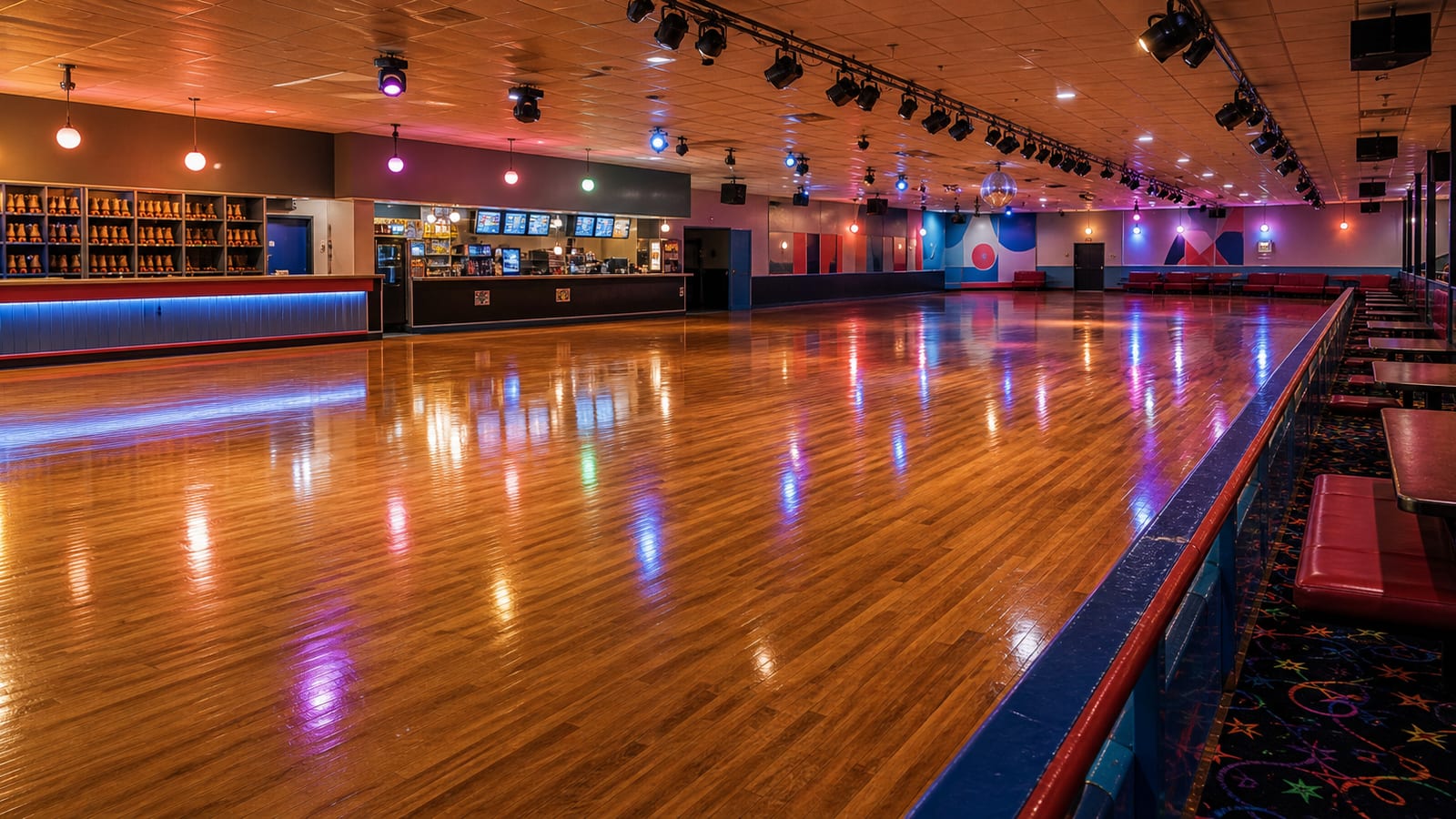
The executive summary should state the concept in one paragraph: family entertainment center, retro adult-night venue, hybrid roller/quad and inline facility, or a competition-oriented rink supporting artistic, hockey, or speed disciplines (the three sport categories the RSA recognizes). The summary needs the location, the target market, the funding ask, and the projected break-even window.
Facility and Site Plan
Square footage is one of the most common questions in a plan. Published industry guidance varies widely depending on concept:
- ROLLER recommends a minimum of about 17,000 square feet for a full-service skating center with an entryway, rink floor, concessions/kitchen, party space, and back-of-house.
- StepByStep Business notes that smaller operations can run from roughly 5,000 to 15,000 square feet depending on local regulations and target capacity.
The plan should specify the rink-floor dimensions, flooring system (typically a hardwood or coated sport surface), and zoning status of the site.
Startup Costs
Startup-cost estimates vary by an order of magnitude across published sources, and the plan should be transparent about which scenario it is modeling.
| Source | Range | Concept |
|---|---|---|
| ROLLER (full-service center) | $500,000 – $1.5 million | New build / full renovation |
| StepByStep Business | $19,800 – $39,850 | Minimal-build leased space |
ROLLER’s published cost categories for a full-service rink include facility acquisition or renovation, rink-floor installation, skate inventory, sound and lighting, technology and rink-management software, permits, marketing, and initial staffing. A defensible business plan picks one scenario, itemizes line by line, and shows the source of funds (owner equity, SBA loan, investor capital).
Revenue Model
A rink rarely survives on admissions alone. ROLLER and other industry sources identify the standard revenue streams a plan should model separately:
- Admissions and session fees
- Skate rentals
- Memberships and season passes
- Birthday parties and private events
- Concessions (food and beverage)
- Pro-shop retail (skates, wheels, accessories)
- Lessons, leagues, and coaching
Private events and concessions tend to carry higher margins than open-skate admissions, and ROLLER’s 2026 RSA recap highlighted private events as the fastest-growing revenue category among member facilities. Pricing assumptions should be sourced from a local competitive scan rather than copied from national averages.
According to ROLLER, well-run skating centers can achieve roughly 20–35% profit margins after rent, payroll, and utilities, though this depends heavily on location and the diversification of the revenue mix.
Operating Costs
The monthly operating section should at minimum cover:
- Rent or mortgage
- Payroll (rink guards, skate-rental staff, concessions, management)
- Utilities (HVAC and lighting are the largest items)
- Insurance (general liability, property, workers’ compensation, equipment breakdown — per the standard coverage stack outlined by StepByStep Business)
- Music licensing (ASCAP, BMI, SESAC blanket licenses are standard for venues playing recorded music)
- Repairs, maintenance, and floor refinishing
- Marketing
- RSA membership and continuing education
Licensing, Insurance, and Compliance
The plan should list the required permits — business license, certificate of occupancy, food-service permits if concessions are operated in-house, and OSHA workplace compliance. Insurance should be quoted from carriers familiar with the entertainment-venue space; the RSA maintains relationships with industry-specialist programs that members can access at discounted rates.
Marketing and Operations
The marketing section should map the local trade area, identify school districts and youth-sports leagues, and outline programming (open skate, adult night, family matinee, homeschool sessions, parties). Operations should describe staffing ratios, training, opening hours, and the rink-management platform being used for bookings, point-of-sale, and skate-rental tracking.
For research on existing rinks in a region, the skating rinks directory and the Florida roller rinks list can be useful for competitive scans.
FAQ
How long does a roller skating rink typically take to reach break-even?
Industry write-ups vary, but published guidance from rink-business sources generally points to a two-to-three-year window for most new facilities to reach break-even, with significant variance based on concept, debt load, and revenue mix.
Do I need to be an RSA member to open a rink?
No. RSA membership is optional, but the association — founded in 1937 and based in Indianapolis — provides industry data, purchasing discounts, marketing programs, and educational seminars that many independent operators find useful when building a business plan.
What size building do I actually need?
Published recommendations range from about 5,000 to 17,000+ square feet depending on whether the concept is a small leased venue or a full family entertainment center with concessions, party rooms, and a pro shop.
Sources
- How To Open a Roller Skating Rink: Costs and Business Plans (ROLLER) — startup-cost range ($500K–$1.5M), 17,000 sq ft facility minimum, revenue streams, 20–35% profit margins, $4.8B/$7.9B market sizing.
- Roller Skating Association International — About — RSA founded 1937, Indianapolis HQ, member services (publications, discounts, marketing programs, seminars), disciplines covered.
- RSA 2026 Recap (ROLLER) — private events identified as fastest-growing revenue category for member facilities.
- Start a Roller Skating Rink (StepByStep Business) — small-format startup-cost range, 5,000–15,000 sq ft sizing, licensing and insurance stack (general liability, property, workers’ comp, equipment breakdown).