Mobile Roller Skating Rinks: How They Work
How mobile roller skating rinks work: modular tile flooring, setup time, surface requirements, included equipment, and what rental packages typically cover.
USA Skating Rinks Editorial Team
Updated May 29, 2026 · Editorial policy
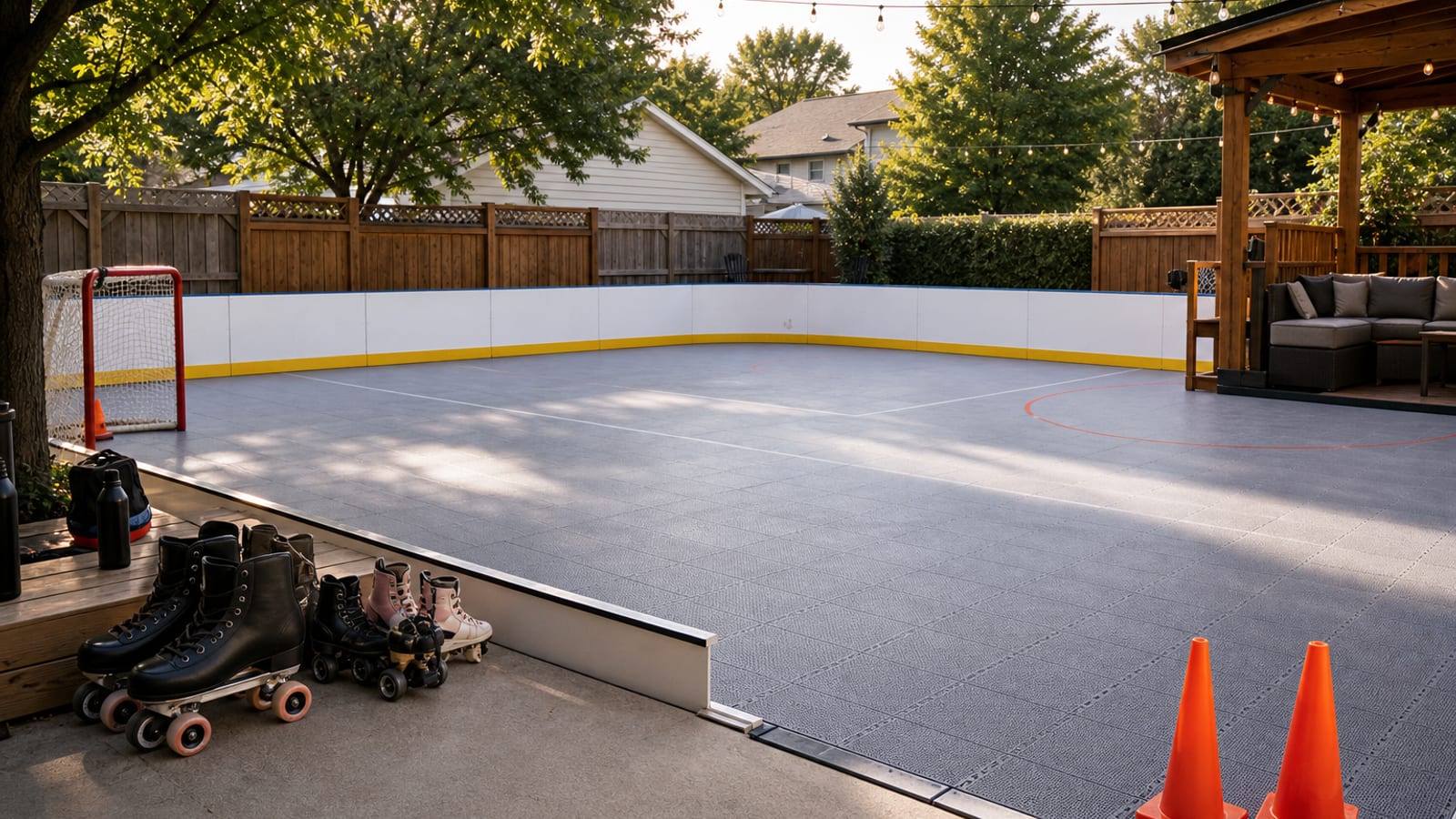
A mobile roller skating rink is a portable, modular skating surface that a rental company delivers, assembles, and removes for a single event or short-term run. It turns a parking lot, gymnasium, ballroom, or tennis court into a working rink for a few hours, then disappears. The technology behind it is mostly interlocking plastic tile, the logistics are mostly trucks and crew, and the appeal is that you do not need a permanent facility to host roller skating.
This guide explains how these rinks are built, what surfaces they need, what a rental package usually includes, and the trade-offs to know before booking one.
What a Mobile Rink Actually Is
A modern mobile roller rink is a temporary floor laid on top of an existing flat surface, surrounded by a barrier, and stocked with rental skates and music. The floor itself is the core engineering. VersaCourt, one of the larger modular sport-court manufacturers, builds its skating surfaces from a high-impact copolymer polypropylene with a patented interlocking mechanism using eight locking points per tile, producing a flat, single-piece surface once assembled. The tiles include “diffuser star perforations” that dampen sound and let outdoor installations drain and dry quickly. VersaCourt’s Compete tile is rated for quad skates, inline skates, and roller skates, and the company partners with RG Event Surfaces specifically to supply rental floors for temporary events.
Other vendors use similar polypropylene tile systems. Industry-grade roller skating floor tiles are typically made from 100% virgin polypropylene that is UV stable and designed not to fade, crack, or chip, with interlocking edges that require no adhesives.
Typical Sizes and Capacity
Mobile rinks are sized in modular increments because the tiles snap together in fixed dimensions. Rental fleets generally offer a small range of footprints to match event space and headcount.
| Configuration | Approximate Footprint | Notes |
|---|---|---|
| Small party rink | 30 ft x 50 ft | Backyard-scale events, birthday parties |
| Mid-size rink | 40 ft x 60 ft | Common school and community event size |
| Large event rink | Up to 40 ft x 96 ft | Roughly 3,480 sq ft, festival scale |
Fantasy World’s rental fleet, for example, lists 30 ft x 50 ft and 40 ft x 60 ft rinks and supplies 80 pairs of skates in youth to adult sizes with each rink. Emerald Events advertises rinks up to 40 ft x 96 ft. These numbers are far smaller than a regulation hockey rink (200 ft x 85 ft) because mobile rinks are built for short sessions and crowd rotation, not full ice-hockey play.
Surface and Site Requirements
The single hardest rule of mobile rinks is the surface underneath. The floor tiles need a flat, hard, level base. Parking lots, tennis courts, gymnasium floors, and smooth concrete pads work. Grass, gravel, and uneven asphalt do not.
When the rink is installed on top of a finished indoor floor, the rental company typically lays a plastic tarp or protective layer beneath the tiles to prevent scratching. Power requirements are modest for the rink itself; Fantasy World specifies two 110-volt, 20-amp circuits to run music and lights.
Site checklist before booking:
- A clear footprint several feet larger than the rink dimensions in every direction
- A flat, hard surface with no significant slope
- Access for a delivery truck and a crew
- Power within reach of the rink perimeter
- A weather plan for outdoor setups (most polypropylene tile is rated for outdoor use, but skaters and electronics are not)
What Is Usually Included in a Rental
Mobile rink packages are bundled because the operator has to ship a lot of gear at once. A typical full-service rental from a regional event vendor includes:
- The tile floor itself and underlayment
- Perimeter barrier (rubber mats with stanchions, or black wrought-iron fencing in fuller packages)
- A stock of rental quad and/or inline skates sized from small youth to adult size 13
- Skate aids (walker-style trainers) for beginners
- Helmets and pads
- A sound system and recorded music
- Disco lighting and often a disco ball
- Setup and teardown labor
- Event insurance, in some packages
- An on-site monitor or attendant
Emerald Events, for instance, lists premium flooring, real roller skates in assorted sizes, skating aids, a changing area with chairs, fencing, setup and teardown, insurance, disco lighting, helmets and pads, and speakers as part of standard rentals.
Setup, Teardown, and Timing
Build and breakdown are faster than most clients expect because tile rinks have no curing time and no fasteners. Industry-quoted setup is roughly 2 to 3 hours for a typical rink when no subfloor is required, with dismantling taking 1 to 2 hours. End-to-end, Emerald Events estimates 2 to 5 hours combined setup and teardown depending on size and location.
A standard rental block is 3 to 4 hours of skating time, with additional hours available as add-ons. That is what makes the model viable for one-night corporate parties, school fundraisers, and pop-up events: the floor is on the truck before the next morning.
Trade-offs vs. a Permanent Rink
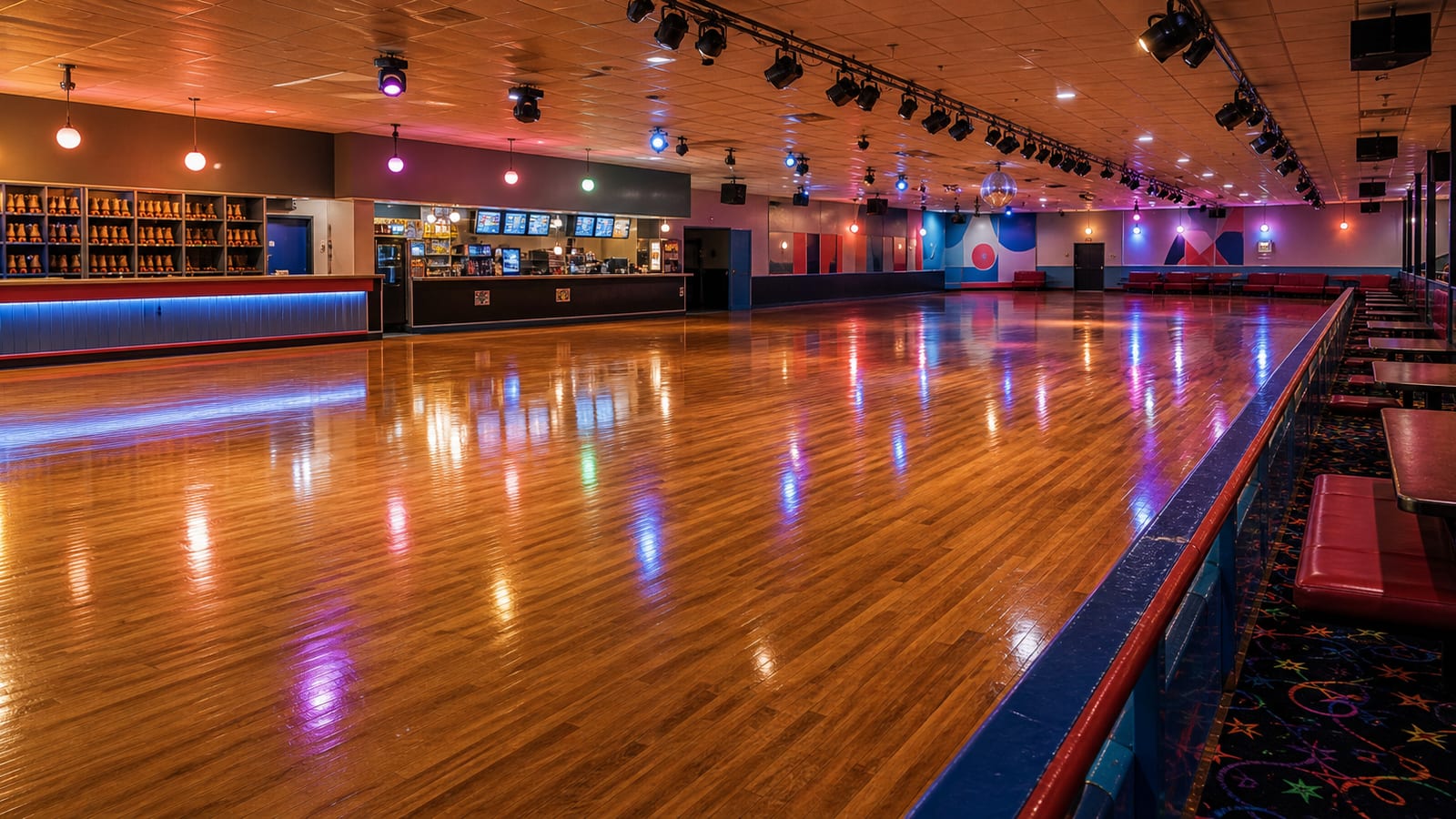
Mobile rinks expand access to roller skating, especially in regions where dedicated rinks have closed. They are not, however, equivalent to a hardwood or polymer-coated permanent surface. Interlocking tile has slight vertical cushioning and small seams between tiles, which most skaters do not notice but which serious speed and artistic skaters do. Capacity is also smaller per session than a commercial rink, since the footprint is constrained by what can be trucked and assembled in a few hours.
For ongoing skating, a permanent facility is still the better option. The skating rinks directory lists permanent rinks across the U.S., and the Illinois roller rinks page is a good example of how to find a fixed location near you.
FAQ
Can a mobile roller rink be set up on grass or dirt?
No. The interlocking tile systems used by virtually all mobile rink vendors require a flat, hard surface such as a parking lot, tennis court, gym floor, or concrete pad. Grass and dirt cannot support the tile lock-up or the skater load.
How many skaters fit on a mobile rink at once?
It depends on size. Vendors typically supply skates in proportion to the rink footprint — for example, 80 pairs of skates are bundled with Fantasy World’s 30 x 50 and 40 x 60 rinks — and rotate skaters through sessions rather than fitting everyone on the floor simultaneously.
What kind of skates can be used on the tile floor?
Modular polypropylene rink tile from manufacturers such as VersaCourt is engineered to accommodate quad skates, inline skates, and roller skates. Ice skates cannot be used; mobile roller rinks and mobile ice rinks are different products with different floor systems.
Sources
- VersaCourt — Commercial Skating Rinks — tile material (copolymer polypropylene), 8-point interlocking mechanism, diffuser star perforations, RG Event Surfaces rental partnership, supported skate types
- Fantasy World — Roller Skating Rink Rentals — 30x50 and 40x60 rink sizes, 80 pairs of skates included, two 110V/20A circuits, rubber mats and stanchions, indoor/outdoor use
- Emerald Events — Mobile Roller Skating Rink Rental — 40x96 (3,480 sq ft) maximum size, included package (fencing, skates, aids, helmets/pads, insurance, lighting), 2–5 hour setup/teardown, plastic tarp underlayment, wrought-iron fencing
- PMFloor — Portable Roller Skating Floor Tiles — 100% virgin polypropylene tile construction, UV stability, interlocking system for indoor/outdoor use