Iceless Ice Skating Rinks: How They Work
How iceless (synthetic) ice rinks work — the HDPE/UHMWPE panels, glide performance vs real ice, costs, and where they make sense.
USA Skating Rinks Editorial Team
Updated May 29, 2026 · Editorial policy
An “iceless ice skating rink” is a skating surface that lets people use standard metal-bladed ice skates without any frozen water underneath. The surface is made of engineered polymer panels — commonly called synthetic ice — that mimic the glide of real ice while sitting on an ordinary subfloor at room temperature. No chillers, no compressors, no Zamboni, and no water bill.
These rinks have moved from a novelty into a legitimate option for backyards, malls, cruise ships, training facilities, and warm-climate venues. Here is how the technology actually works and what to expect from it.
What “Iceless Ice” Is Made Of
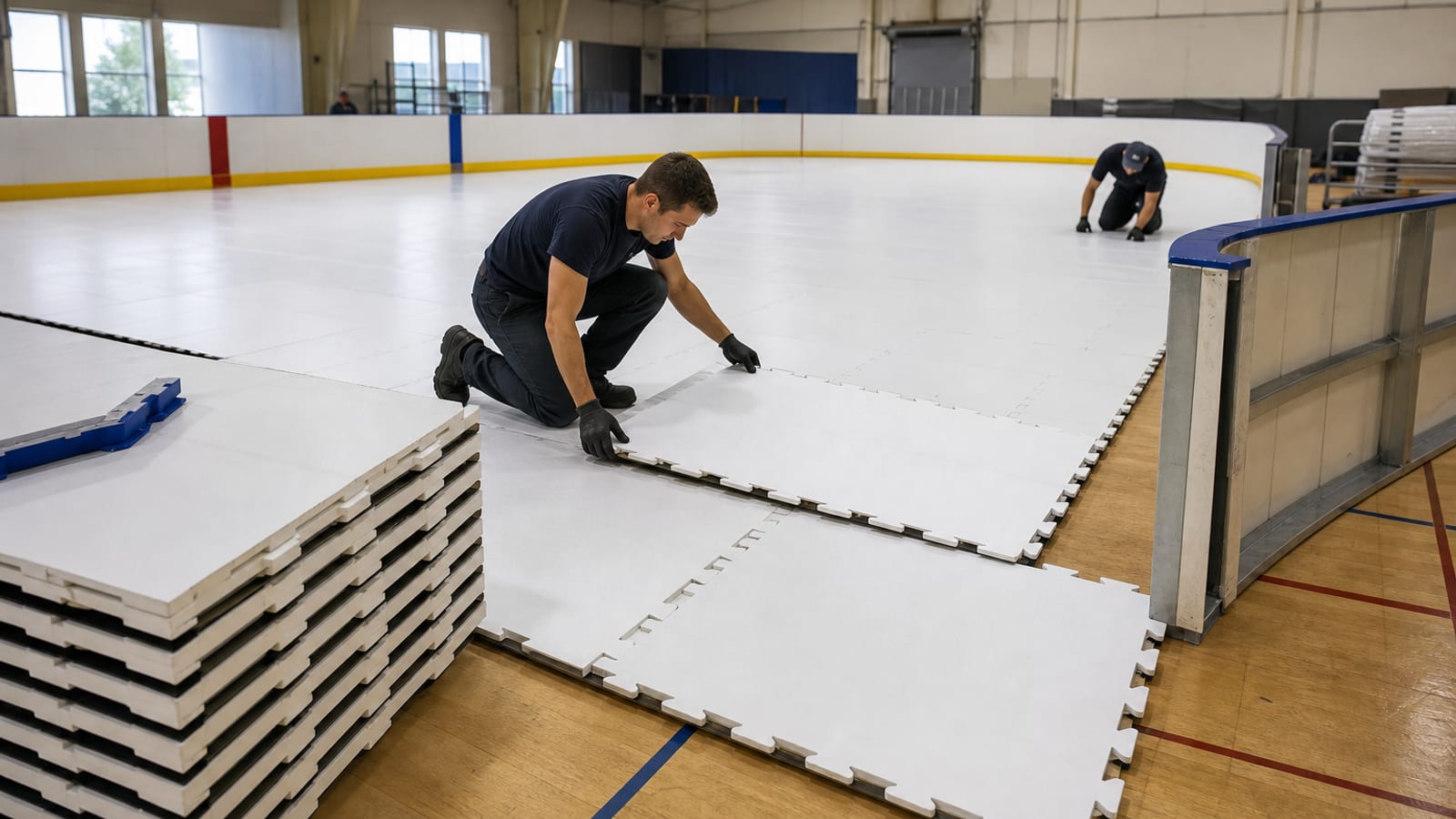
Synthetic ice is a solid polymer panel, typically a few feet on each side, that interlocks with neighboring panels to form a continuous skating sheet. The earliest commercial product, Hi-Den Ice, appeared in 1982 and used interlocking high-density polyethylene (HDPE) panels that had to be re-sprayed with gliding fluid roughly once a month.
Modern panels have moved beyond plain HDPE. Many premium products now use ultra-high-molecular-weight polyethylene (UHMW-PE), which is denser and slicker. Some manufacturers compound a lubricant directly into the polymer so the panel “self-lubricates” as the blade passes over it, eliminating the need to spray on a glide fluid.
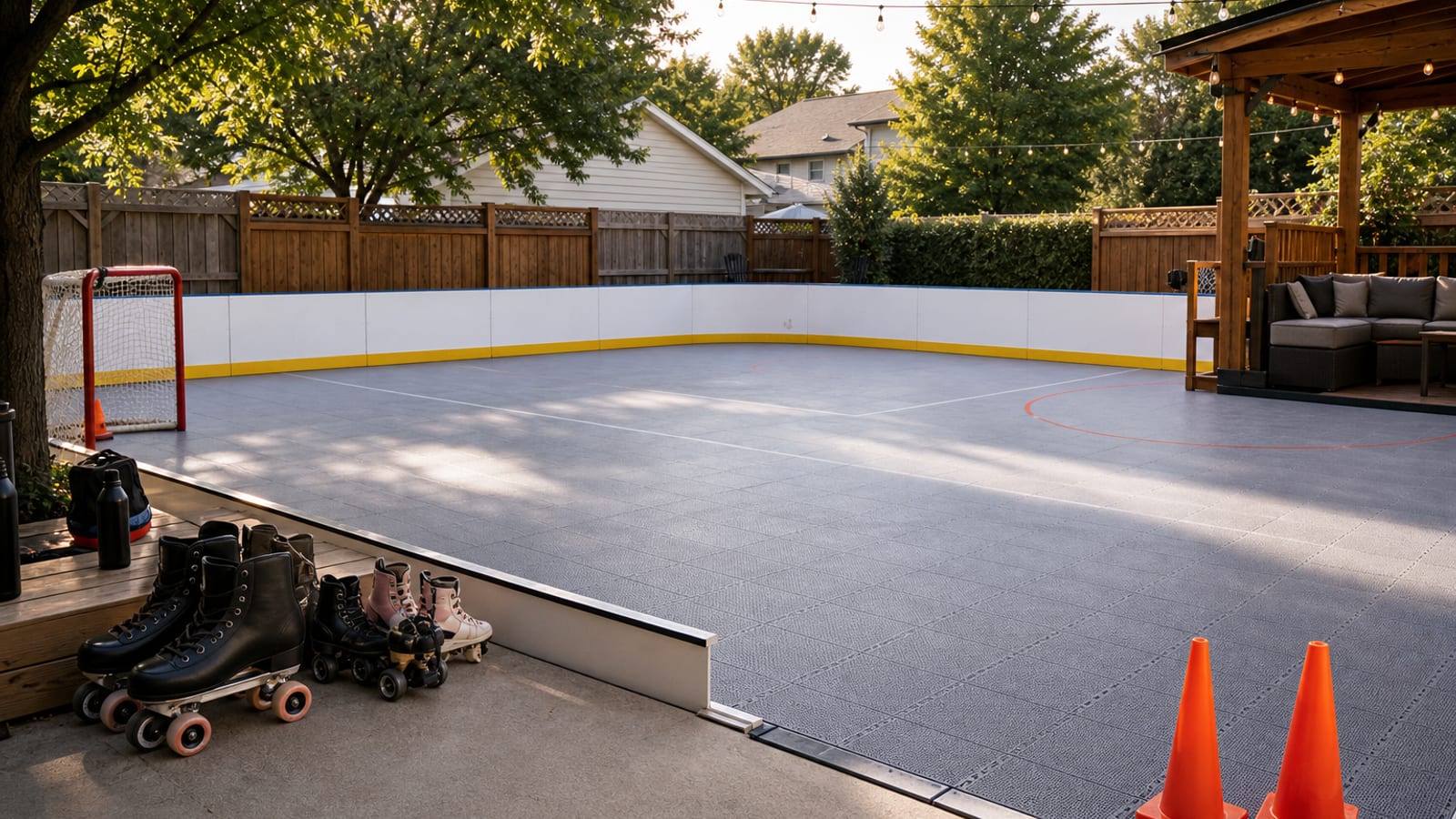
The panels sit on top of any flat, level substrate: concrete, asphalt, plywood, even compacted dirt or grass for temporary installations.
How the Glide Actually Works
On real ice, the very top molecular layer behaves like a quasi-fluid film, which is what makes the blade slip. Synthetic ice has no such layer, so engineers compensate two ways:
- Low-friction polymer. UHMW-PE has one of the lowest coefficients of friction of any solid plastic.
- Embedded or applied lubricants. Either compounded into the panel during manufacture or sprayed on periodically.
The result is a surface that, according to industry data, reaches roughly 90% of the glide of natural ice — friction is only about 10–15% greater than real ice on top-tier UHMW-PE panels. Skaters can spin, do crossovers, and land jumps, though most people notice a brief adjustment period.
The trade-off is on the blade. Industry estimates put noticeable blade dulling at somewhere between 30 and 120 minutes of skating time on synthetic ice, depending on panel quality and blade hardness. Frequent users typically rotate two pairs of blades or sharpen more often.
How a Rink Is Built
A typical iceless rink installation looks like this:
| Step | What happens |
|---|---|
| 1. Prep substrate | Level a concrete pad, plywood deck, or flat ground. |
| 2. Lay panels | Interlocking tongue-and-groove or dovetail panels click together. |
| 3. Trim edges | Outer panels are cut to fit the rink footprint. |
| 4. Add dasher boards | Optional mini-boards or full hockey boards around the perimeter. |
| 5. Apply glide enhancer | Only required for non-self-lubricating products. |
No water, no refrigeration loop, no insulated slab. Because there is no cooling system, an iceless rink works indoors or outdoors, in any climate, and at any time of year — including on rooftops, beaches, and inside shopping centers.
What It Costs
Pricing depends on panel grade and rink size. As a public reference point, Glice — a Swiss manufacturer — lists residential 2 ft × 2 ft “Steller Glide Home” sheets at $64.69 each and commercial-grade 6.5 ft × 3.2 ft sheets at $450 each on its US shop. A double-garage backyard rink (about 16.8 ft × 16.8 ft) built from 64 home sheets comes out to roughly $3,519 in panel material by Glice’s own example.
Glice estimates that synthetic ice rinks are 20–50% cheaper to purchase than refrigerated rinks of equivalent size, and that a 200 m² synthetic rink can avoid roughly $3,350 per year in electricity costs that a comparable refrigerated sheet would burn through chillers and resurfacing. Panels typically carry multi-year warranties (Glice quotes up to 12 years) and a usable life that the company describes as up to 20 years with proper maintenance.
Recurring costs are modest: a periodic surface cleaner, occasional glide fluid for non-self-lubricating systems, and more frequent skate sharpenings.
Iceless vs Refrigerated: When Each Wins
Synthetic ice does not perfectly replace a refrigerated NHL-grade sheet. Elite hockey programs and competitive figure skaters still train primarily on real ice. Where iceless rinks make sense:
- Warm climates where refrigeration cost is prohibitive.
- Backyard or garage rinks for skill practice — stickhandling, edge work, shooting.
- Mall, hotel, and event installations where temporary or year-round skating is wanted without HVAC penalties.
- Sustainability-focused venues avoiding the energy and water draw of mechanical refrigeration.
Where refrigerated ice still wins: competitive speed, top-end glide, blade longevity, and the “feel” most experienced skaters describe as effortless.
Major Manufacturers to Know
A few established vendors dominate the synthetic ice market, including Glice (Switzerland), Xtraice (Spain), and PolyGlide Ice (USA). All three publish product specs and pricing on their websites and supply both residential kits and large commercial installations.
If you’re hunting for a traditional rink to skate at instead, browse the full skating rinks directory or jump straight to listings for Illinois roller rinks.
FAQ
Can you really use regular ice skates on an iceless rink?
Yes. Standard hockey or figure skates with sharpened steel blades are the correct equipment. The polymer is engineered to be cut by metal edges in the same way real ice is. Plastic-bladed skates are not used.
Does synthetic ice feel the same as real ice?
Close, but not identical. Top-grade UHMW-PE panels glide at roughly 85–90% of natural ice. Skaters report it feels slightly “stickier” at first and requires marginally more push, but technique transfers directly.
Do iceless rinks need any maintenance?
Far less than refrigerated ice. There is no resurfacing, no chiller servicing, and no water. Routine maintenance is limited to sweeping debris, periodic cleaning, and — for non-self-lubricating brands — reapplying a glide enhancer.
Sources
- Synthetic ice — Wikipedia — HDPE/UHMW-PE materials, 1982 Hi-Den Ice history, ~90% glide and 10–15% friction figures, blade wear 30–120 minute range.
- Iceless Ice Rinks: How They Work — Glice — Polymer-plus-embedded-lubricant construction, 20–50% cheaper than refrigerated, 12-year warranty, install-anywhere flexibility.
- How Much Does a Synthetic Ice Rink Cost? — Glice — $64.69 home sheet and $450 commercial sheet pricing, $3,519 double-garage example, ~$3,350/year electricity savings, 20-year panel lifespan.