How to Start a Roller Skating Rink: Step-by-Step
A step-by-step guide to opening a roller skating rink: costs, square footage, floor types, music licensing, insurance, zoning, and permits.
USA Skating Rinks Editorial Team
Updated May 29, 2026 · Editorial policy
Opening a roller skating rink is a real-estate-heavy capital project layered on top of a hospitality business. According to the industry software firm Roller, most operators spend between $500,000 and $1.5 million to open a rink, depending on size, location, and whether you build new or convert an existing structure. The steps below follow the sequence that lenders, the Roller Skating Association International (RSA), and code officials generally expect.
1. Write a Lender-Ready Business Plan
Before you scout sites, build a plan you can defend to a bank. The RSA notes that lenders typically look for a Debt Service Coverage Ratio (DSCR) of around 1.25x, and that the SBA 7(a) and 504 loan programs are the most common financing vehicles for rink operators. Your plan should cover trade-area demographics, competing venues, projected admissions, rentals, party packages, concessions, and a multi-year P&L. The RSA emphasizes that a feasibility study should be grounded in data — Census figures, drive-time analysis, and structured market research — rather than optimism.
2. Pick the Right Building and Confirm Zoning
The RSA recommends a 10- to 20-minute drive-time trade area and a site zoned for assembly or amusement use. Roller suggests targeting properties of 15,000 to 30,000 square feet to fit the skating surface plus reception, party rooms, concessions, restrooms, and storage. A typical commercial skating floor is approximately 15,000 square feet (roughly a 125 ft x 125 ft skating area). Plan parking around one space per 100–120 square feet of rink area, plus spectator stalls.
Use this directory of skating rinks and the regional listings such as roller rinks in Texas to study how established operators have positioned themselves and what their facilities look like.
3. Meet Building, Life-Safety, and ADA Standards
Per the RSA, your facility must comply with the NFPA 101 Life Safety Code and the International Building Code (IBC). That means illuminated exits, panic-bar egress doors, fire-rated assemblies, and full ADA accessibility for entrances, restrooms, and spectator seating. Coordinate with the local building department, fire marshal, and health department early — these reviews drive your construction schedule.
4. Choose and Install the Skating Floor
The floor is the largest single line item and the most consequential long-term decision. Roller publishes the following installed cost ranges for a 15,000 sq ft surface:
| Floor type | Installed cost (15,000 sq ft) |
|---|---|
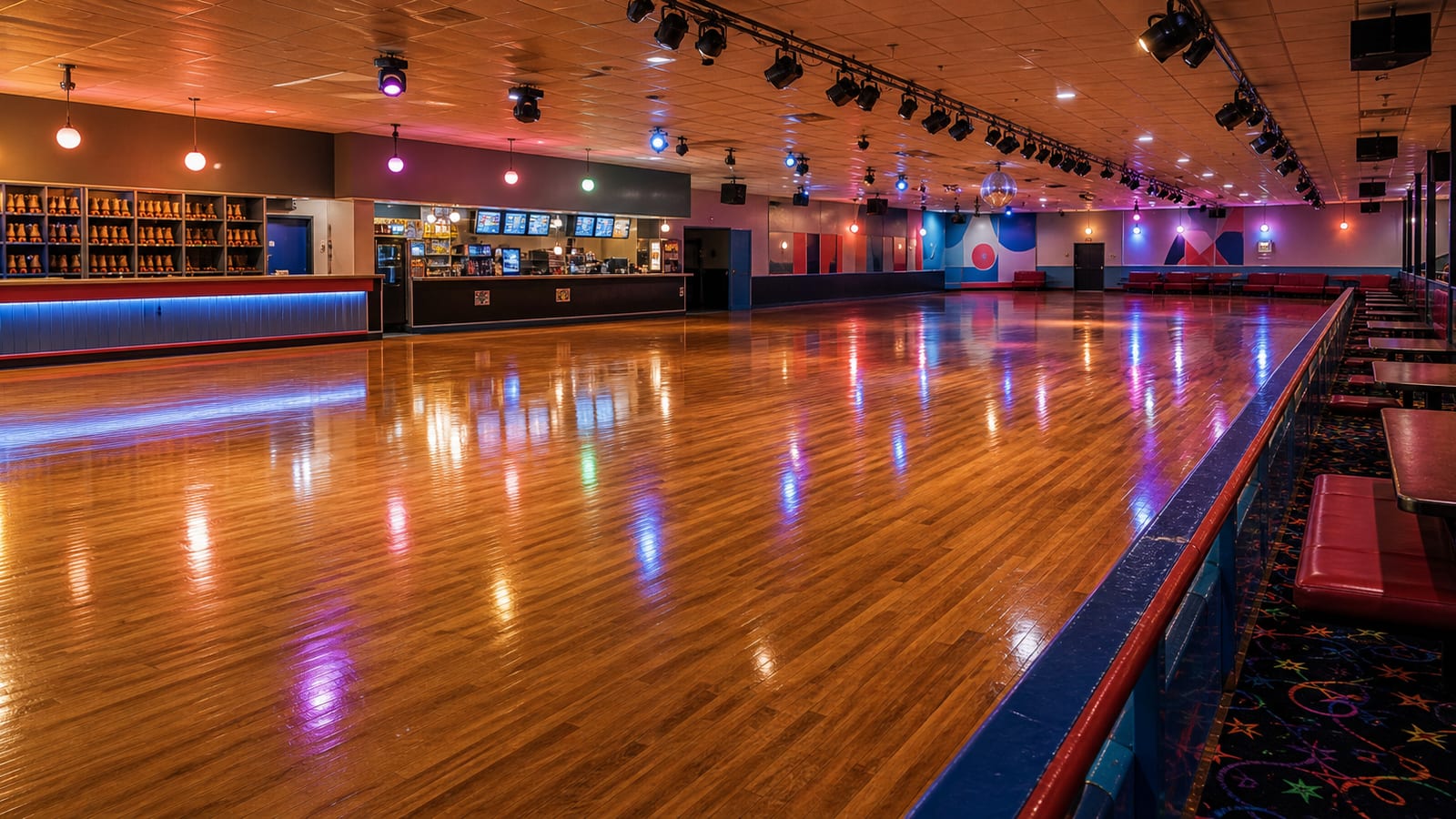
| Hardwood (maple) | $150,000 – $315,000 |
| Synthetic | $90,000 – $255,000 |
| Concrete | $90,000 – $315,000 |
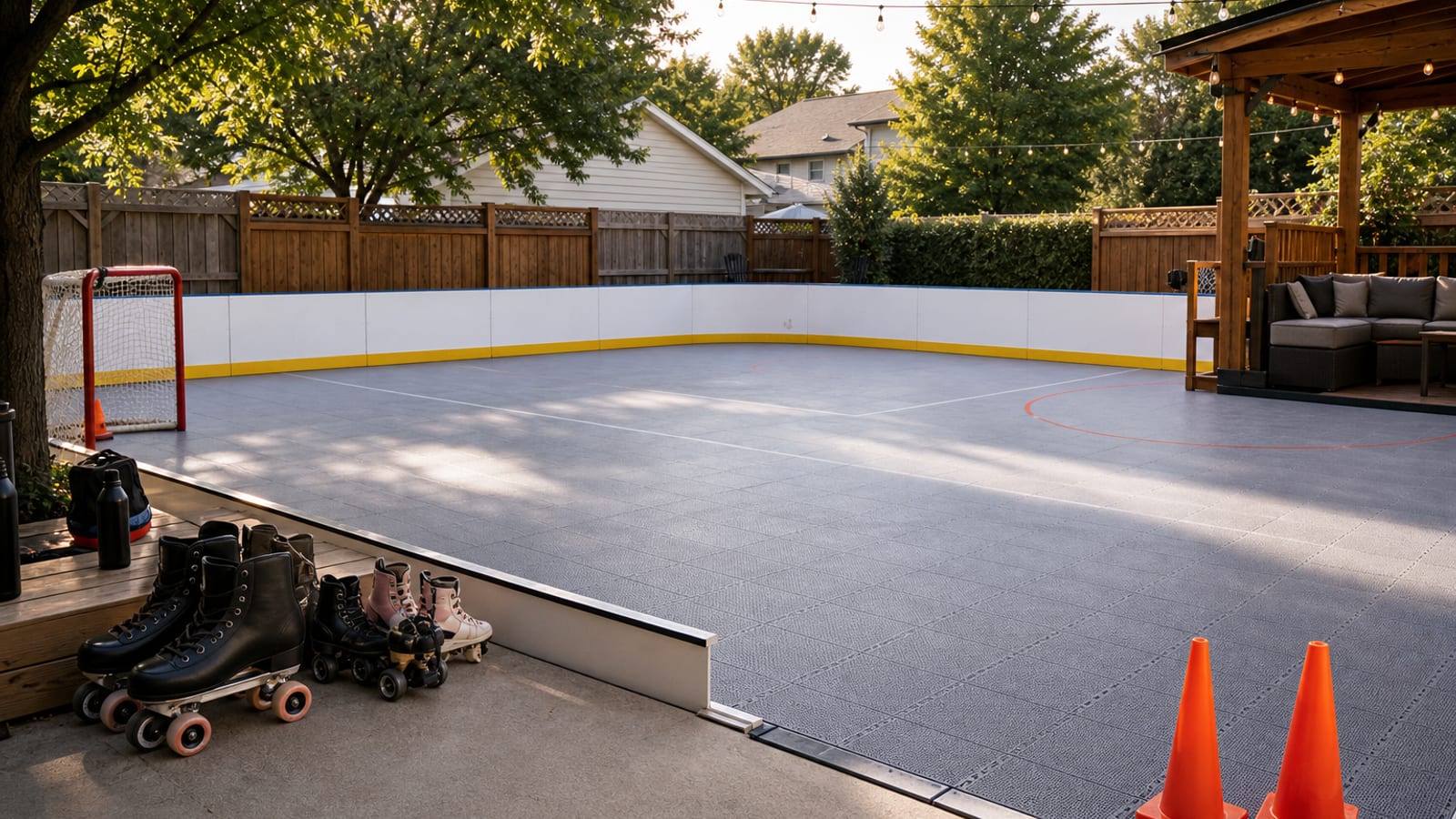
| Modular tile | $15,000 – $45,000 |
The RSA identifies northern hard maple as the gold standard for roller skating, noting that with proper subfloors, vapor barriers, and annual maintenance, a quality maple floor can last for decades. Synthetic and modular systems are lower in upfront cost and easier to install in multi-use spaces.
5. Budget the Rest of the Buildout
Roller’s published ranges for other major line items include:
- Property purchase: $400,000 – $3,000,000
- Annual lease (if leasing): $50,000 – $250,000
- Renovation and fit-out: $350,000 – $3,000,000
- Lighting and sound: $95,000 – $700,000
- Rental skates: $75 – $250 per pair
- Protective helmets: $30 – $150 each
A rental skate inventory sized for peak sessions is typically one of the larger soft-cost categories, since you need a full size run in both quad and inline.
6. Secure All Four Music Licenses
Public performance of recorded music in a rink requires licensing from all four U.S. performing rights organizations: ASCAP, BMI, SESAC, and Global Music Rights (GMR). The RSA warns that no single license covers them all and that skipping one exposes the rink to infringement claims. The RSA collects annual fees on behalf of ASCAP, BMI, and GMR for its members, which can simplify administration.
7. Bind Comprehensive Insurance
The RSA’s published checklist for rink insurance includes general liability, property, business interruption, workers’ compensation, equipment breakdown, umbrella liability, and cyber coverage. Specialty programs (the RSA cites JBL Trinity World) underwrite rink-specific exposures such as skating injuries, party-room incidents, and concessions. Coverage should be bound before your soft opening.
8. Sequence Permits and Pre-Opening Inspections
The RSA recommends a sequential permitting roadmap: pre-application meeting with the jurisdiction, plan submission, fire and health coordination, music licenses secured 30–60 days before opening, insurance bound, systems testing, then a soft opening. Documented standard operating procedures for floor maintenance, skate inspection, staffing ratios, incident reporting, and emergency response make the facility safer and, in the RSA’s words, “more bankable.”
9. Join the Industry Network
The Roller Skating Association International has operated as the industry’s trade association since 1937. Membership gives operators access to weekly town halls, Rinksider Magazine, group-purchasing discounts, marketing programs, liability-insurance guidance, and an annual convention. For first-time operators, the RSA offers a Future Rink Owner membership that includes its industry guidebook and access to experienced rink owners.
FAQ
How much does it cost to start a roller skating rink?
Roller estimates most operators spend $500,000 to $1.5 million, with the skating floor alone running $15,000 to $315,000 installed depending on material.
How big does a roller skating rink need to be?
A typical commercial rink uses about 15,000 square feet of skating surface, and Roller recommends a total building footprint of 15,000–30,000 square feet to include support spaces.
What music licenses does a roller rink need?
According to the RSA, a U.S. rink needs licenses from ASCAP, BMI, SESAC, and GMR. The RSA can bundle ASCAP, BMI, and GMR fees for member rinks.
Sources
- Roller — How Much Does it Cost to Build a Roller Skating Rink? — total startup range, square footage targets, flooring cost ranges by material, lighting/sound and equipment costs.
- Roller — How To Open a Roller Skating Rink: Costs and Business Plans — step-by-step opening process, 17,000 sq ft minimum recommendation, technology and staffing categories.
- RSA — 10 Things You Need to Know When Opening Your Own Skating Rink — DSCR/SBA financing, NFPA 101 and IBC compliance, maple floor recommendation, four-PRO music licensing, insurance categories, permitting sequence.
- Roller Skating Association International — RSA history since 1937, member services, Future Rink Owner membership, ASCAP/BMI/GMR fee collection.