How to Open a Skating Rink Business: Costs, Permits, and Plan
Learn how to open a skating rink business with realistic startup costs, a feasibility plan, rink format decisions, permits, insurance, and opening steps.
USA Skating Rinks Editorial Team
Updated July 12, 2026 · Editorial policy
In this guide
Scroll tables sideways to see all columns.
To open a skating rink business, first choose the rink format, validate demand with a feasibility study, build a budget that includes several months of working capital, secure the right site and permits, then install and test the skating, safety, and operating systems before opening. A roller rink can have reported startup costs of $500,000 to $1.5 million, while ice and synthetic rinks have materially different equipment and utility requirements.
The key decisions are the local market, whether roller, ice, or synthetic ice best fits it, and whether the project can support its property, equipment, licensing, insurance, and payroll costs. This guide pulls together what authoritative industry sources publish about each step.
Key Takeaways
- Start with a feasibility study of the local drive-time market and competing entertainment venues before committing to a site.
- Choose roller, ice, or synthetic ice early because the format shapes the building, equipment, utilities, and operating model.
- Budget in ranges and reserve working capital for payroll, rent, and utilities before the rink reaches stable operations.
- Confirm zoning, building and life-safety requirements, accessibility, insurance, and music licensing before opening.
For context on existing operators in the market, browse the skating rinks directory or look at city-level competition in markets like roller rinks in New York.
Step 1: Decide Between Roller, Ice, or Synthetic
The format dictates almost every downstream cost.
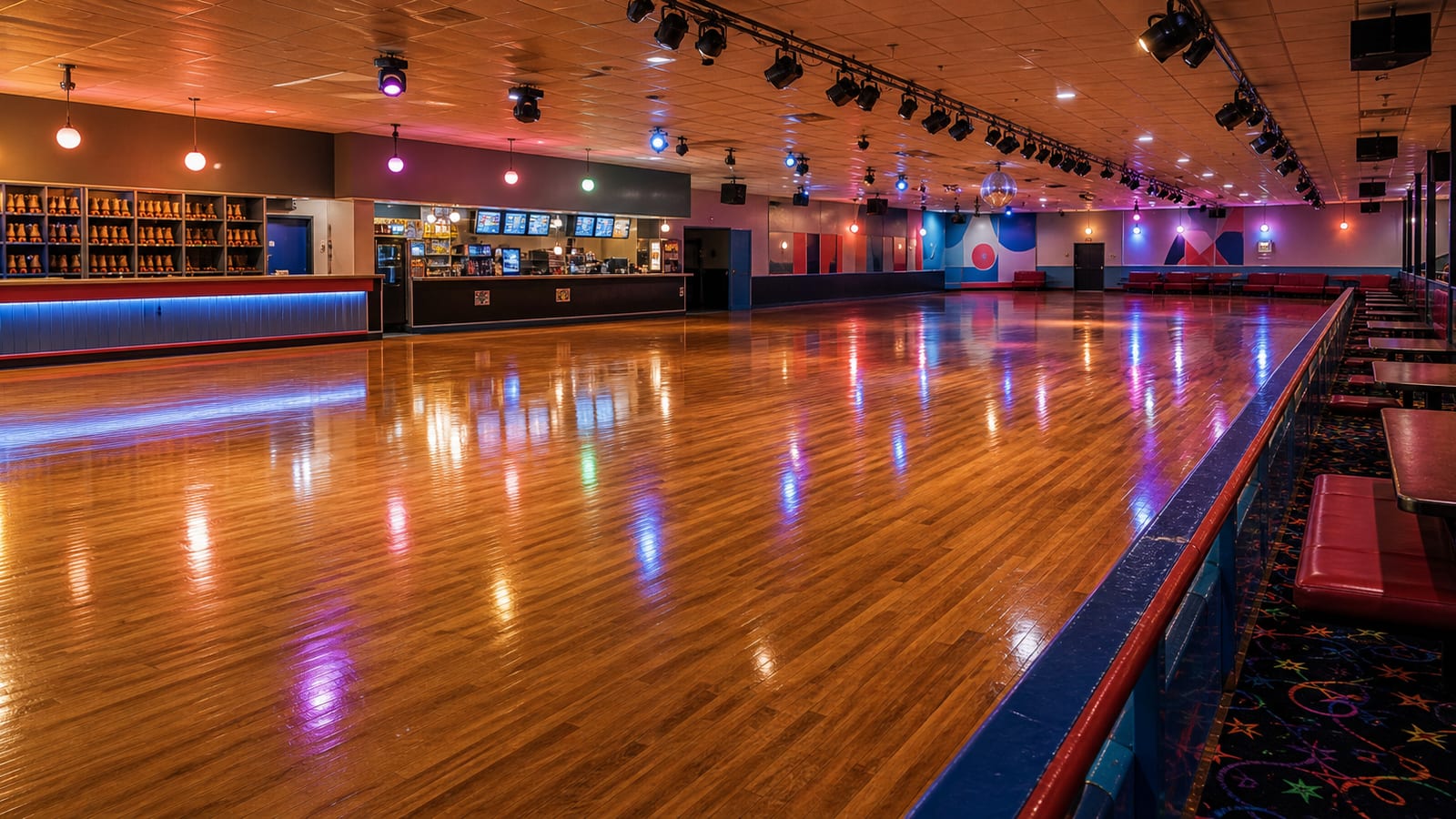
- Roller rinks typically operate around 15,000 square feet of skating surface (roughly 125 ft × 125 ft) and sit inside buildings of 15,000–30,000 square feet once concessions, rentals, and parking are included, according to ROLLER’s cost guide.
- Ice rinks follow standardized dimensions: a hockey sheet is 85 ft × 200 ft (17,000 sq ft) and an Olympic figure-skating sheet is 98 ft × 200 ft (19,600 sq ft), per Sports Venue Calculator.
- Synthetic ice dramatically reduces refrigeration and utility load. Sports Venue Calculator lists synthetic installations between roughly $14,000 and $395,000, compared with $150,000–$950,000 for a real ice rink at the small-to-mid commercial scale.
Each format also implies a different operating cadence: ice plants require year-round refrigeration management, while roller floors need recoating and surface maintenance.
Step 2: Build a Feasibility Study and Business Plan
The Roller Skating Association (RSA), the industry’s trade association since 1937, advises future rink owners to start with a feasibility study covering a 10–20 minute drive-time trade area, competitor venues (other rinks, bowling alleys, trampoline parks), and demographic data from Census Bureau tools such as Census Business Builder and data.census.gov.
The RSA also points future owners toward SBA financing — the 7(a) program for working capital and equipment, and the 504 program for real estate or major equipment — and notes lenders typically look for a Debt Service Coverage Ratio around 1.25x.
Membership in the RSA provides access to a 500-page industry guidebook, Rinksider Magazine, supplier directories, and a network of more than 1,000 existing operators.
Step 3: Budget Realistically
Use our skating rink business plan outline to organize the market research, operations plan, and financial assumptions. For a roller-only project, the roller rink opening guide covers that format in more detail.
Published industry ranges vary widely, so plan in ranges rather than precise figures.
| Item | Reported Range | Source |
|---|---|---|
| Total roller rink startup | $500,000 – $1.5 million | ROLLER |
| Property purchase | $400,000 – $3,000,000 | ROLLER |
| Property lease | $50,000 – $250,000 / year | ROLLER |
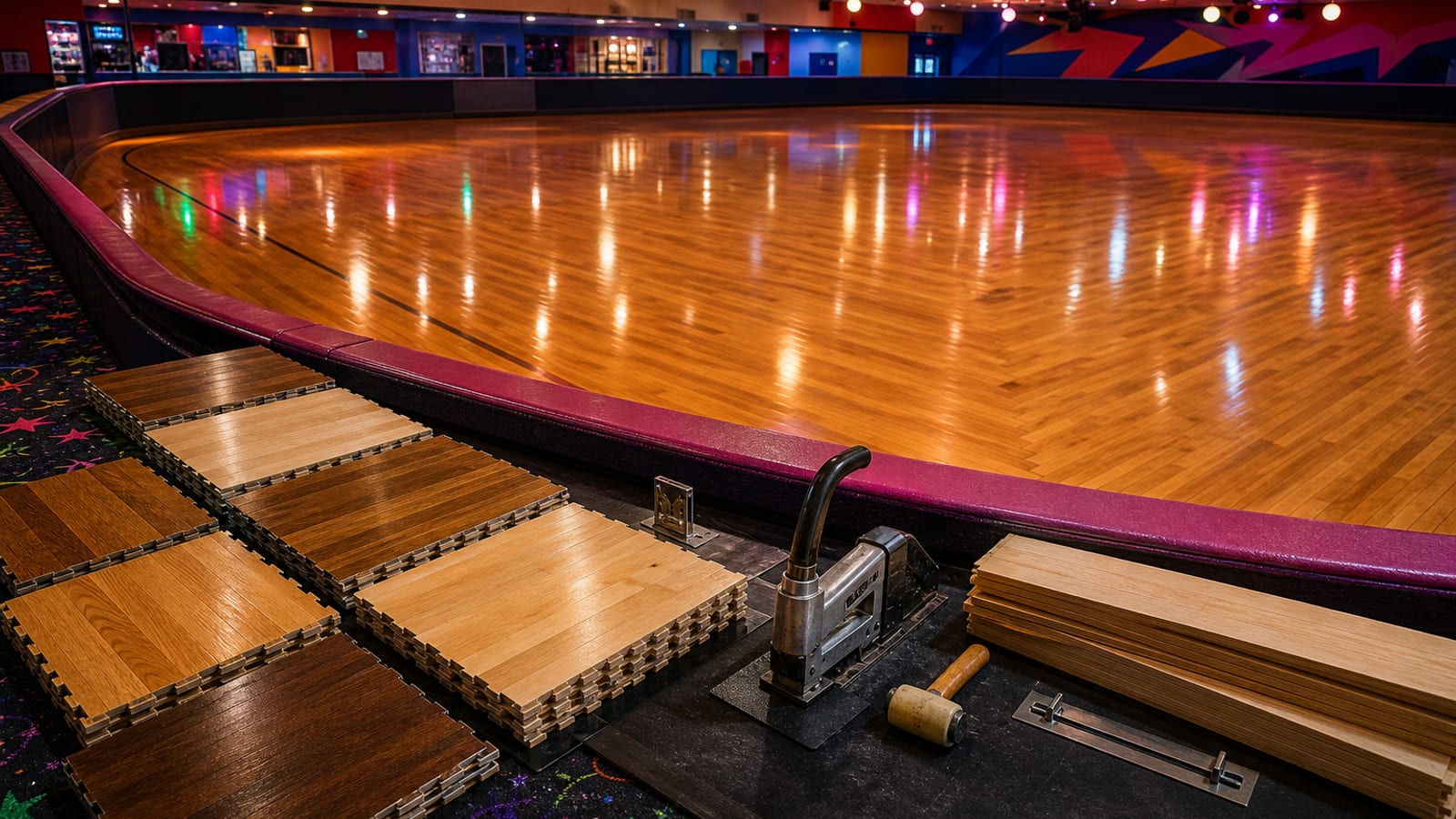
| Northern maple hardwood floor | $150,000 – $315,000 | ROLLER |
| Synthetic skating floor | $90,000 – $255,000 | ROLLER |
| Modular tile floor | $15,000 – $45,000 | ROLLER |
| Lighting & sound | $95,000 – $700,000 | ROLLER |
| Real ice rink (full build) | $150,000 – $950,000 | Sports Venue Calculator |
| Ice refrigeration system | $3,000 – $60,000 (varies with size) | Sports Venue Calculator |
| Resurfacer (Zamboni-class) | $10,000 – $250,000 | Sports Venue Calculator |
Working capital is a separate line. Plan for several months of payroll, rent, and utilities before the rink stabilizes.
Step 4: Engineer the Skating Surface
For roller rinks, the RSA identifies northern hard maple as the industry-standard floor, requiring proper subfloors, vapor barriers, finishes, and annual recoating. A well-maintained maple floor can last decades.
For ice rinks, the chiller system can use brine, glycol, Freon, or ammonia. Indirect systems (refrigerant chills a secondary glycol loop under the slab) are easier to maintain and lower-risk than direct systems, though direct systems can be more efficient. The slab itself needs embedded piping and sub-floor heating to prevent frost heave.
Compare roller rink floor types and maintenance before requesting installation quotes.
Step 5: Handle Licensing, Zoning, and Insurance
Include the questions in our roller rink insurance guide when discussing your operating plan with an insurer.
Per the RSA’s published guidance, a rink must:
- Confirm assembly or recreation zoning and obtain any required special-use permit.
- Meet parking minimums of roughly one space per 100–120 square feet of rink area, plus spectator parking.
- Comply with NFPA 101 Life Safety Code, the International Building Code (rinks fall under assembly occupancy), and the ADA Standards for Accessible Design.
- Secure all four major music performance licenses: ASCAP, BMI, SESAC, and Global Music Rights (GMR), ideally 30–60 days before opening.
The RSA’s recommended insurance portfolio includes general liability with participant coverage, property, business interruption, workers’ compensation, equipment breakdown, umbrella/excess, liquor liability (if applicable), and cyber coverage for POS and customer data.
Step 6: Plan the Revenue Mix
Rinks rarely survive on admission alone. Published revenue streams include public skating sessions, skate rentals, memberships, birthday parties and private events, lessons, fundraisers, food and beverage, retail, and arcade games. ROLLER recommends conservative seasonal modeling, since skating is a discretionary entertainment spend that fluctuates with weather, school calendars, and competing leisure options.
Step 7: Pre-Opening Checklist
The RSA outlines a typical permitting and opening sequence:
- Pre-application meeting with the planning department.
- Submit building, electrical, and life-safety plans.
- Coordinate fire marshal and health department inspections.
- Acquire ASCAP, BMI, SESAC, and GMR music licenses.
- Bind insurance.
- Install and test systems (refrigeration or floor, sound, lighting, POS).
- Staff training and dry-run operations.
FAQ
How much does it actually cost to open a roller skating rink?
ROLLER reports that most operators spend between $500,000 and $1.5 million, with the floor, lighting and sound, and property representing the largest line items.
How big does the building need to be?
For a roller rink, ROLLER suggests a building of 15,000–30,000 square feet to accommodate a ~15,000 sq ft skating surface plus rentals, concessions, and amenities. Ice hockey rinks follow the 85 ft × 200 ft standard (17,000 sq ft of ice).
Do I need to join the Roller Skating Association?
Membership is optional, but the RSA provides a 500-page industry guidebook, supplier discounts, weekly town halls, and a network of more than 1,000 existing rink owners — resources that are difficult to replicate independently.
Sources
- How Much Does it Cost to Build a Roller Skating Rink? — ROLLER — startup cost ranges, floor types and pricing, building size, lighting and sound budgets
- 10 Things You Need to Know When Opening Your Own Skating Rink — Roller Skating Association — feasibility study, SBA financing, DSCR, zoning, music licenses, insurance portfolio, opening sequence
- Future Rink Owner — Roller Skating Association — RSA membership benefits, 500-page industry guide, network size
- Cost to Build an Ice Rink for Permanent Use — Sports Venue Calculator — ice rink dimensions, real vs. synthetic ice cost ranges, refrigeration and resurfacer pricing