How to Open a Roller Skating Rink
A research-backed guide to opening a roller skating rink: startup costs, site selection, flooring, licensing, insurance, music rights, and operations.
USA Skating Rinks Editorial Team
Updated July 12, 2026 · Editorial policy
In this guide
Scroll tables sideways to see all columns.
Opening a roller skating rink is a capital-intensive hospitality project that blends real estate, recreation, food service, and entertainment licensing. Total startup investment typically runs $500,000 to $1.5 million, depending on whether the operator is building new or converting an existing commercial shell, according to industry analyses by Roller Software and the Roller Skating Association International (RSA). This guide walks through what the published industry sources say about each major decision point.
1. Validate the Market Before Signing a Lease
A roller rink’s trade area is usually defined as the population within a 10–20 minute drive. RSA-aligned guidance recommends profiling that trade area using free public tools such as the U.S. Census Business Builder and data.census.gov, paying particular attention to household income, the density of school-age children, and competing entertainment venues (bowling, trampoline parks, family entertainment centers, and other rinks).
Lenders generally expect a Debt Service Coverage Ratio of about 1.25x, meaning the projected cash flow should cover annual debt payments with 25 percent to spare. SBA 7(a) loans are commonly used for working capital, build-out, and equipment, while SBA 504 loans are better suited for property purchases or major construction.
2. Find a Building That Can Legally Be a Rink
Industry guides recommend a footprint of 15,000 to 30,000 square feet to hold the skating surface, lobby, concessions, party rooms, restrooms, and back-of-house storage. Roller Software cites a practical minimum of 17,000 square feet for a full-service venue. A round skating surface roughly 125 feet in diameter consumes about 15,000 square feet on its own.
Roller rinks fall under assembly occupancy in the International Building Code, and municipalities typically require zoning classified as amusement, recreation, or assembly. Parking ratios commonly cited are one space per 100–120 square feet of rink area, plus spectator parking. Life-safety design must follow NFPA 101 and the IBC, and accessibility must comply with the ADA Standards for Accessible Design. Hiring an architect or code consultant early is standard practice.
If your search includes specific metros, you can study existing operators on directories like our skating rinks directory or browse a regional list such as roller rinks in New York to see how established venues are sized and positioned.
3. Choose the Skating Surface
The skating surface is the single most defining capital decision. Published price ranges for a 15,000-square-foot facility, from Roller Software, are:
| Floor type | Installed cost range |
|---|---|
| Hardwood (maple) | $150,000–$315,000 |
| Synthetic sheet | $90,000–$255,000 |
| Coated concrete | $90,000–$315,000 |
| Modular tile | $15,000–$45,000 |
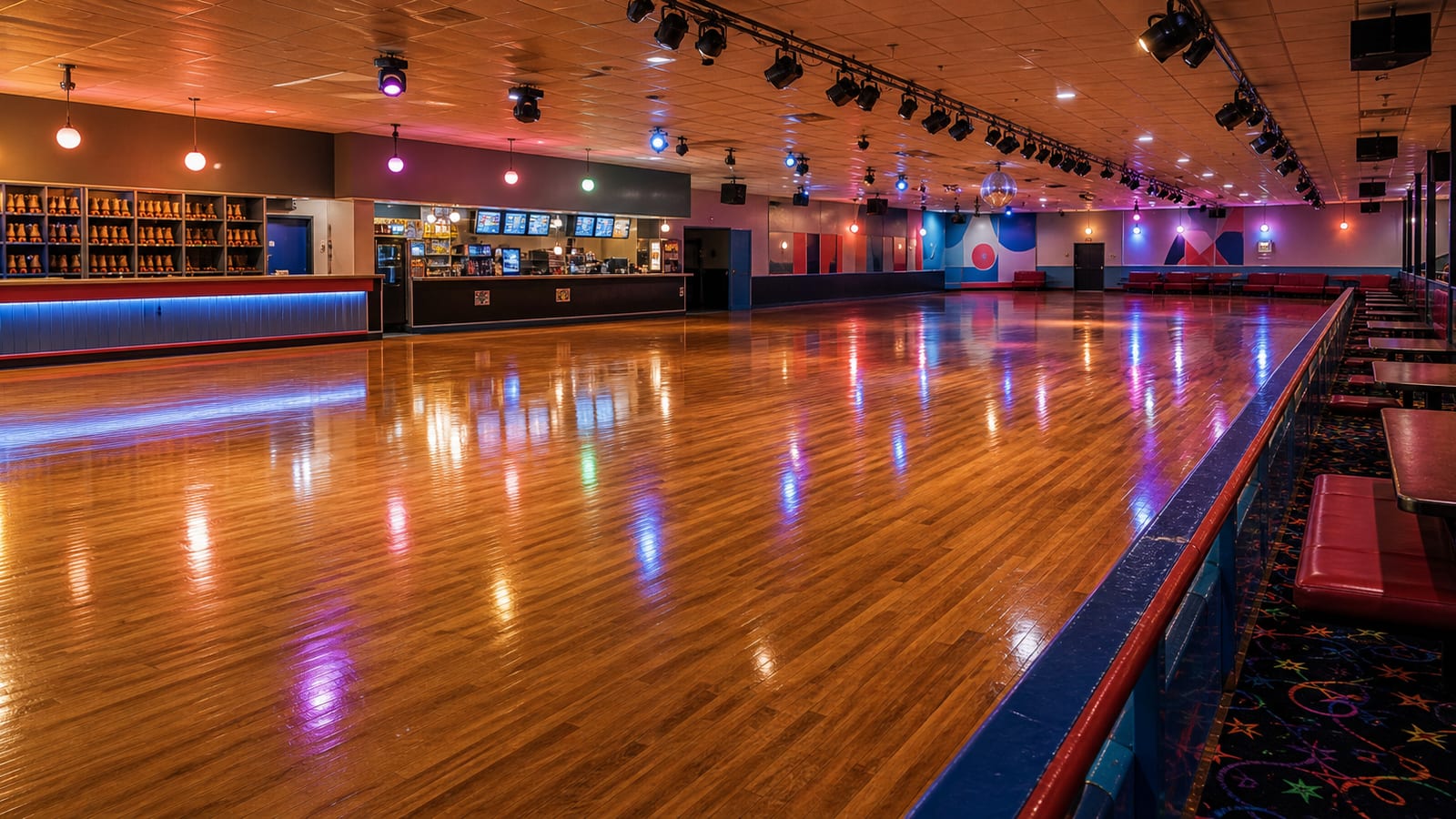
Northern hard maple, specified to Maple Flooring Manufacturers Association (MFMA) standards, is widely treated as the gold standard for traditional rinks because of its durability and consistency, and can last for decades with annual recoating. Operators selecting maple typically work with RSA member contractors who specialize in skating installations, since subfloor, vapor barrier, and finish specs differ from gymnasium flooring.
4. Budget the Rest of the Build-Out
Beyond the floor, the major published cost categories include:
- Renovation / fit-out: $350,000–$3,000,000 depending on the condition of the shell
- Lighting and sound: $95,000–$700,000
- Rental skates: $75–$250 per pair
- Helmets and protective equipment: $30–$150 per helmet
A full skate fleet for a mid-size rink can therefore represent a six-figure inventory line on its own. Operators are advised to budget at least six months of working capital for payroll, rent, and utilities before the rink reaches steady-state cash flow.
5. Handle Licensing, Insurance, and Music Rights
A rink cannot legally open without the right paperwork in place:
- Music performance licenses must be secured from all four U.S. PROs — ASCAP, BMI, SESAC, and Global Music Rights (GMR) — typically 30–60 days before opening. RSA collects fees for ASCAP, BMI, and GMR on behalf of members; SESAC is paid directly.
- Insurance should include general liability with participant coverage, property, business interruption, workers’ compensation, equipment breakdown, umbrella, and — where alcohol is served — liquor liability. RSA’s preferred carrier for skating-specific coverage is JBL Trinity World.
- Permits typically follow the sequence: pre-application meeting with planning, building/electrical/life-safety plan review, fire marshal and health department sign-offs, then certificate of occupancy.
Insurers favor written safety procedures, skate inspection logs, and floor maintenance records, all of which can reduce premiums.
6. Build Revenue Streams Beyond Public Sessions
The RSA notes that established rinks rarely rely on open skate alone. Common revenue lines include private events and birthday parties, lessons, fundraising nights, retail and concessions, vendor partnerships (such as ICEE, Pepsi, and Dippin’ Dots), arcade games, and structured programs like the STEM Roller Skating Program and Kids Skate Free. The broader roller skating market was valued at roughly $4.8 billion in 2024 and is projected to grow at about 6.2 percent annually through 2032. Well-run rinks typically target 20–35 percent profit margins after expenses.
7. Use Industry Resources
The Roller Skating Association International, founded in 1937, sells a multi-hundred-page industry guide and offers a Future Rink Owner membership that includes weekly town halls, a community of more than 1,000 operators, and consultant access. New operators are also advised to write standard operating procedures for floor maintenance, skate inspection, incident reporting, and emergency egress — documentation that also strengthens loan and insurance applications.
Frequently Asked Questions
How much does it cost to open a roller skating rink?
Published industry sources put total startup investment at roughly $500,000 to $1.5 million, with property, flooring, lighting and sound, and skate inventory being the largest line items.
How big does a roller skating rink building need to be?
Most full-service rinks occupy 15,000 to 30,000 square feet, with about 17,000 square feet considered a practical minimum to fit the skating surface, concessions, party space, and back-of-house.
What music licenses does a roller rink need?
A rink must license public performance rights from all four U.S. PROs: ASCAP, BMI, SESAC, and GMR. RSA can administer three of the four; SESAC is paid directly.
Sources
- How To Open a Roller Skating Rink: Costs and Business Plans — Roller Software — total investment range, 17,000 sq ft minimum, insurance and software categories, market size and margins.
- How Much Does It Cost to Build a Roller Skating Rink — Roller Software — floor type cost ranges, lighting and sound budget, skate and helmet pricing, footprint guidance.
- 10 Things You Need to Know When Opening Your Own Skating Rink — Roller Skating Association — DSCR and SBA loan guidance, trade area, zoning and parking, NFPA/ADA requirements, MFMA maple flooring standard, PRO music licensing, JBL Trinity World insurance, revenue diversification, permitting sequence.
- Roller Skating Association International — RSA founding (1937) and industry trade association role.