How Much Does a Roller Skating Rink Floor Cost?
Roller skating rink floors run roughly $2 to $21 per square foot installed. Compare maple, polyurethane, concrete, and modular tile pricing and lifespan.
USA Skating Rinks Editorial Team
Updated May 29, 2026 · Editorial policy
A roller skating rink floor is one of the largest single line items in a rink build. Pricing varies widely depending on the material, the size of the surface, the condition of the subfloor, and regional labor rates. Published industry figures for a standard 15,000-square-foot commercial rink put the floor alone anywhere from roughly $15,000 for basic modular tile up to $315,000 for a high-grade hardwood maple installation.
This guide breaks down what each material costs, what drives the price, and how the floor fits into a broader rink budget.
Typical Cost Ranges by Material
Published per-square-foot installed pricing for the four most common roller rink surfaces falls into the following ranges:
| Material | Installed Cost (per sq ft) | Typical Lifespan |
|---|---|---|
| Maple hardwood | $6–$10 | 20–25 years |
| Polyurethane | $4–$8 | 15–20 years |
| Vinyl | $3–$7 | 10–15 years |
| Rubber | $2–$5 | 8–12 years |
Concrete coatings sit in a similar range to vinyl, typically $3–$10 per square foot installed depending on the system specified. Modular polypropylene tile, sold by manufacturers like VersaCourt for both indoor and outdoor rinks, is the lowest-cost option on a per-tile basis but adds up quickly at scale.
What a Full Rink Floor Costs
Multiplying out per-square-foot pricing for a typical commercial-size surface of about 15,000 square feet, published ranges for a full floor installation are:
- Hardwood maple: $150,000–$315,000
- Synthetic (polyurethane or similar): $90,000–$255,000
- Concrete with skate coating: $90,000–$315,000
- Modular interlocking tile: $15,000–$45,000
These ranges assume a clean, level subfloor and standard regional labor. They do not include perimeter wall systems, dasher boards, or specialty lighting tied to the floor surface.
Why Maple Costs the Most
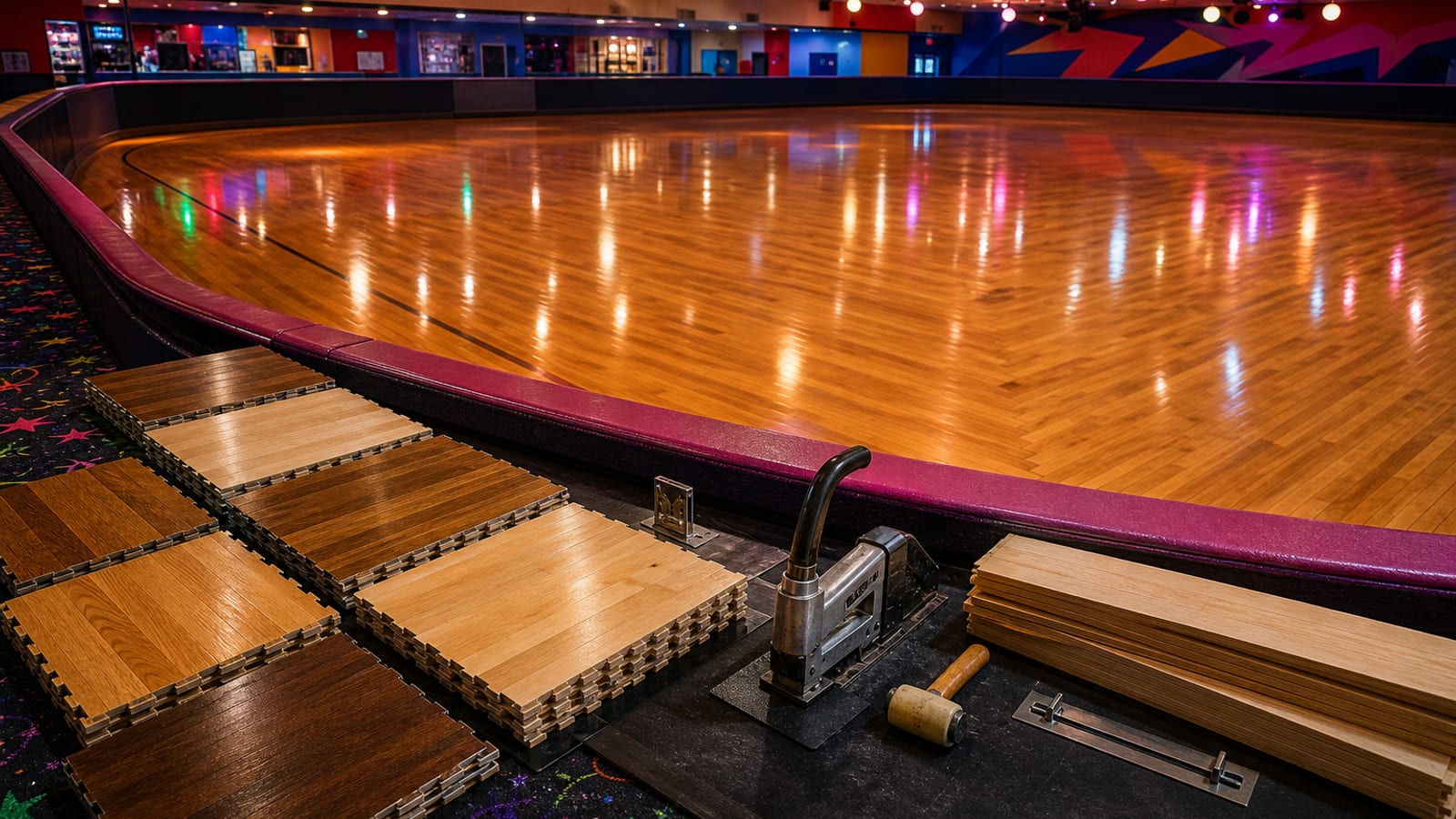
Hardwood maple has historically been the standard for traditional roller rinks because it offers a fast, consistent roll and can be refinished many times over its life. The trade-off is upfront cost and maintenance. Maple needs weekly cleaning, careful humidity control, and periodic refinishing roughly every five to seven years to keep the surface playing the way skaters expect. Over a 20- to 25-year service life, the floor will typically be sanded and resealed multiple times, which is part of why total cost of ownership remains competitive despite the high install price.
Polyurethane-poured systems are the most common modern alternative. They install faster than a sprung maple system, are seamless once cured, and run roughly $4–$8 per square foot installed, making them a middle-ground choice for new builds.
Modular Tile: The Low-Cost Option
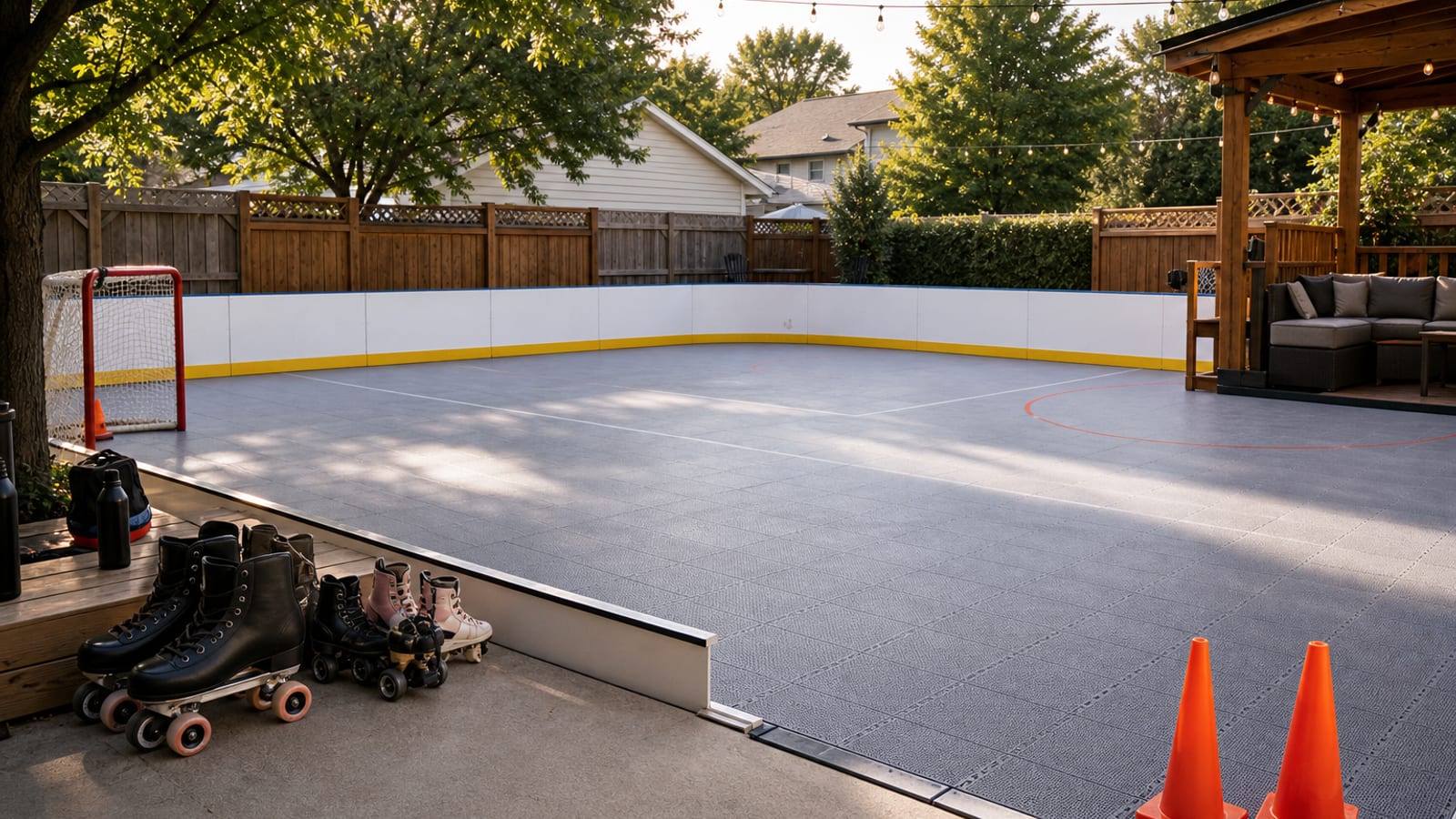
Interlocking polypropylene tiles from manufacturers such as VersaCourt are designed specifically for skating and use a two-level surface that allows wheels to grip on cornering while still rolling smoothly. The tiles snap together, can be installed over an existing concrete slab, and can be lifted and redeployed if the operator moves locations. Because no adhesives or sanding are required, install labor is dramatically lower than hardwood.
The cost trade-off is feel: many serious skaters and artistic clubs still prefer poured polyurethane or maple for speed work. Modular tile is most common in multi-use venues, outdoor rinks, and pop-up or seasonal installations.
What Drives the Final Price
Even within a single material category, real-world quotes can swing significantly based on:
- Square footage. A regulation-style roller rink is often around 15,000 square feet, but operators build anywhere from small studio floors to large warehouse conversions.
- Subfloor condition. A cracked or unlevel slab can add tens of thousands of dollars in prep before a finish system goes down.
- Edge and transition work. Curved corners, kick plates, and dasher transitions are often priced separately from the main field.
- Finish system. On poured floors, the number of coats, line striping, and any logo work adds to the per-square-foot figure.
- Region and labor market. Labor rates for sport-floor installers vary substantially by metro area.
Floor Cost in Context of Total Rink Budget
Industry estimates put the total cost to open a new roller skating rink at roughly $500,000 to $1.5 million, depending on whether the operator buys or leases the building. Within that budget, the floor is typically one of the top three expenses alongside building acquisition or fit-out and lighting/sound. For comparison, lighting and sound systems for a commercial rink can run $95,000–$700,000, and full renovation and fit-out for a leased building can run $350,000–$3,000,000.
For operators researching the broader market, the main skating rinks directory lists active venues, and the Florida roller rinks page shows examples of operating rinks in a high-volume regional market.
Maintenance and Replacement
A new floor is not the end of the spending cycle. Maple typically needs annual deep cleaning and refinishing every several years. Polyurethane systems usually require periodic recoats to maintain grip and appearance. Modular tile is the lowest-maintenance option but individual tiles can be damaged and replaced. Routine maintenance for a standard-sized rink is commonly budgeted in the low-five-figure range per year.
FAQ
What is the cheapest roller rink floor?
Modular interlocking polypropylene tile is the lowest-cost option, with full floor installs for a 15,000-square-foot rink reported in the $15,000–$45,000 range. It is also the easiest to install over an existing concrete slab.
Is maple worth the higher cost?
Maple has the longest service life of the common materials, typically 20–25 years with proper care, and can be refinished repeatedly. For traditional rinks where skater feel and resale value matter, the higher upfront cost is often justified by lifespan. For multi-use or budget-driven venues, polyurethane or modular tile usually wins.
Can a roller rink be installed over existing concrete?
Yes. Polyurethane coatings, vinyl sheet goods, and modular tile systems are all designed to install directly over a sound concrete slab. Cracked or uneven slabs typically need grinding, patching, or self-leveling underlayment before the finish system goes down, which adds to the total project cost.
Sources
- ROLLER — How Much Does It Cost to Build a Roller Skating Rink? — Total rink build budget; per-floor installed cost ranges for hardwood, synthetic, concrete, and modular tile on a 15,000 sq ft rink; lighting, sound, and fit-out ranges.
- GymFloors — Roller Rink Floors — Per-square-foot installed costs and lifespans for maple, polyurethane, vinyl, and rubber; maintenance and refinishing intervals.
- VersaCourt — Skating Rink Flooring — Modular polypropylene tile product specifications, two-level surface design for skate wheel grip, indoor and outdoor use.