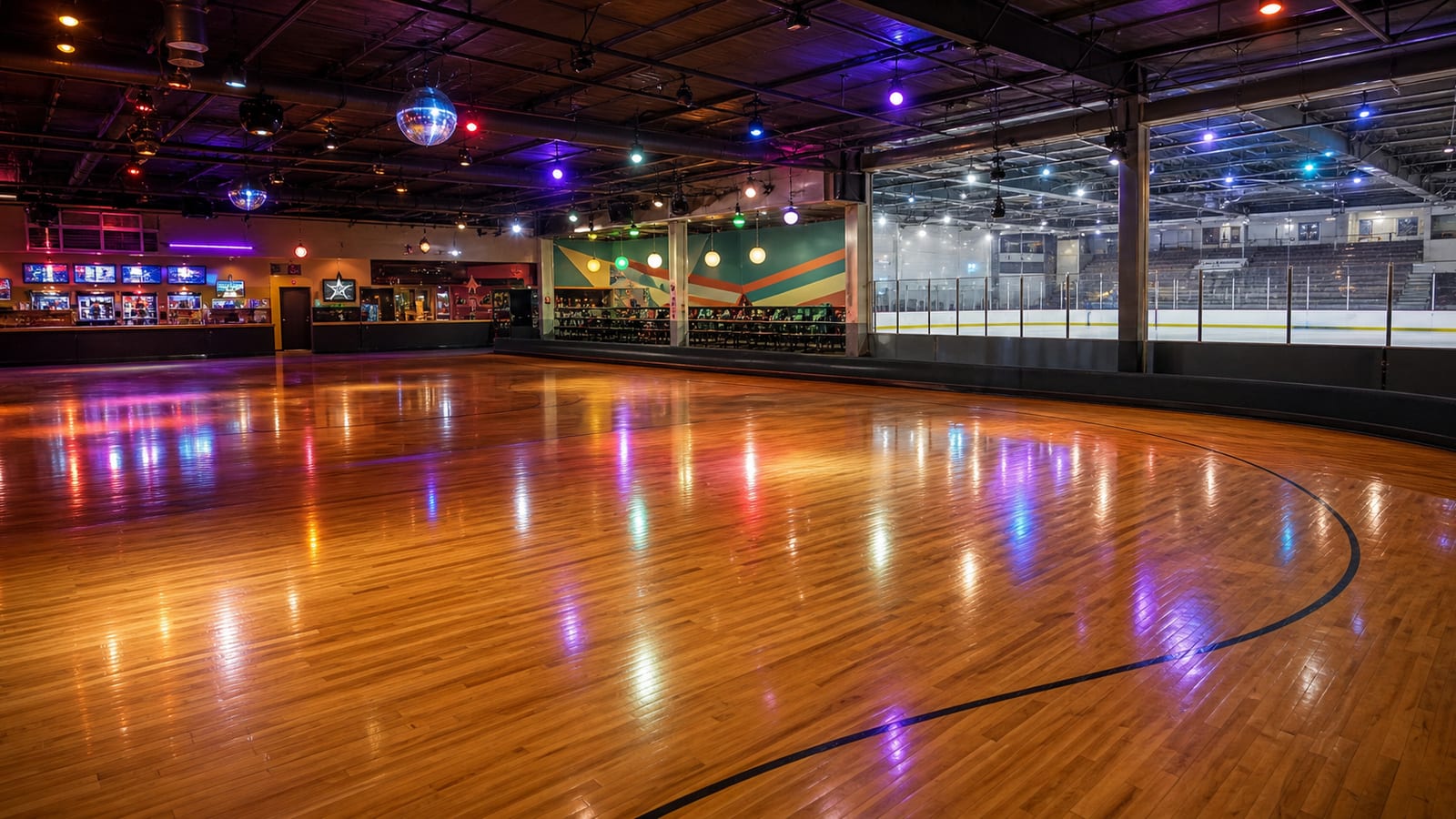
What Is Open Skate? Public Sessions, Rules & Booking
Open skate means a public recreational skating session. Learn how it differs from lessons and hockey, what to check before booking, and what beginners need.
USA Skating Rinks Editorial Team
Updated September 20, 2026 · Editorial policy
In this guide
Scroll tables sideways to see all columns.
Open skate, also called public skating, is a scheduled session for recreational skating at an ice or roller rink. You buy admission for that session and skate under the venue’s rules. Check its age limits, booking requirements and equipment policy; “open” does not mean free admission, unlimited hours or an included lesson.
Use our directory to find a rink near you, then look for public skating on its official calendar.
Which Session Should You Book?
| Calendar label | What it is for | Check before booking |
|---|---|---|
| Open skate / public skating | Recreational skating | Ages, reservations, rentals and permitted activities |
| Beginner lesson / learn to skate | Instruction | Class level, registration and included practice time |
| Freestyle / figure-skating practice | Figure-skating training on ice | Required skill level, equipment and coaching rules |
| Open hockey / stick and puck | Hockey activity on ice | Whether it is a game or practice session, age limits and protective equipment |
| Adult skate / family skate | A session aimed at a particular audience | Exact age, supervision and entry rules |
These labels are a starting point; read the actual listing. For example, Chelsea Piers Sky Rink separates public skating from its figure-skating and hockey sessions. Its public rules prohibit jumps, spins, hockey sticks and pucks; its freestyle sessions have skill requirements and require personal figure skates. Sky Rink session descriptions
Roller rinks use different program names, and a themed night may carry its own restrictions. See adult skate nights explained before choosing an adults-only event.
Do You Need a Reservation?
Follow the booking instructions for that venue and session. Walk-in admission and advance booking both exist:
- OhioHealth Chiller says its public-skating tickets are purchased on arrival, with no reservations required. Chiller public skating
- Robert Crown in Evanston sells general public-skating tickets up to seven days ahead. Online sales close two hours before the session; remaining tickets are sold in person starting 30 minutes before it begins. Its DJ skate has separate ticket arrangements. City of Evanston booking rules
These policies were checked September 20, 2026. Recheck the current event before traveling, particularly for special dates or a group visit.
Can Beginners Attend? Is Help Included?
Look for a public or beginner session whose entry requirements you meet. If you want someone to teach you, book instruction explicitly: admission alone does not establish that a coach will be available.
For example, Edru Skate says it does not have someone available to teach skating during public-skating hours and directs learners to its classes. Floor supervision and a skating lesson are different services. Edru FAQ
Ask staff where beginners should practice and how traffic moves during that session. Follow local signs and announcements about direction, passing and use of the center; do not carry another rink’s floor rules over automatically. For a first roller visit, use our first-time roller-skating guide.
What to Check Before Your First Session
- Confirm the surface. Book ice skating if you want blades, or roller skating if you want wheels.
- Check who can attend. Read age restrictions, youth supervision rules and non-skating spectator charges.
- Confirm the equipment. Ask whether your skate type and size are available, what rental costs, and what protective gear you need to bring.
- Read the ticket window. Note the session’s end time and the venue’s check-in instructions.
- Learn the local rules before entering. Ask about beginner space, skating aids and any restrictions on tricks or practice.
Our rental guide covers size and fit questions. For clothing, see what to wear ice skating or what to wear roller skating.
Bringing Children to Open Skate
Choose a session that suits the child’s age, available equipment and the adult’s ability to supervise. Ask whether a parent must skate, whether someone may accompany a child in shoes, and whether skating aids are permitted. Do not count on a rental aid or an on-duty instructor without confirmation.
No session label guarantees an injury-free outing. Read the venue’s requirements and consider a beginner class if your child needs instruction. Our children’s skating guide has a visit-planning checklist.
Common Open-Skate Questions
Can I go alone?
You do not need a team for recreational public skating. Check the session’s admission rules; a child attending without an adult may face supervision restrictions.
Does open skate include rental skates?
Read the admission details. Rentals may be a separate charge, included with that ticket, or unavailable for the program or size you need.
Can I practice tricks during public skating?
Only activities the venue allows. Ask staff before practicing; an empty-looking area does not give you permission to use it for jumps, spins or fast skating.
How long does open skate last?
Use the actual schedule or ticket. Our session-length guide compares dated ice and roller examples and explains fixed sessions versus timed entry.