How Big Is an Ice Skating Rink? NHL & Olympic Sizes
An NHL rink is 200 × 85 feet. Compare NHL, international and figure skating dimensions in feet and meters, plus square footage and backyard examples.
USA Skating Rinks Editorial Team
Updated September 20, 2026 · Editorial policy
In this guide
Scroll tables sideways to see all columns.
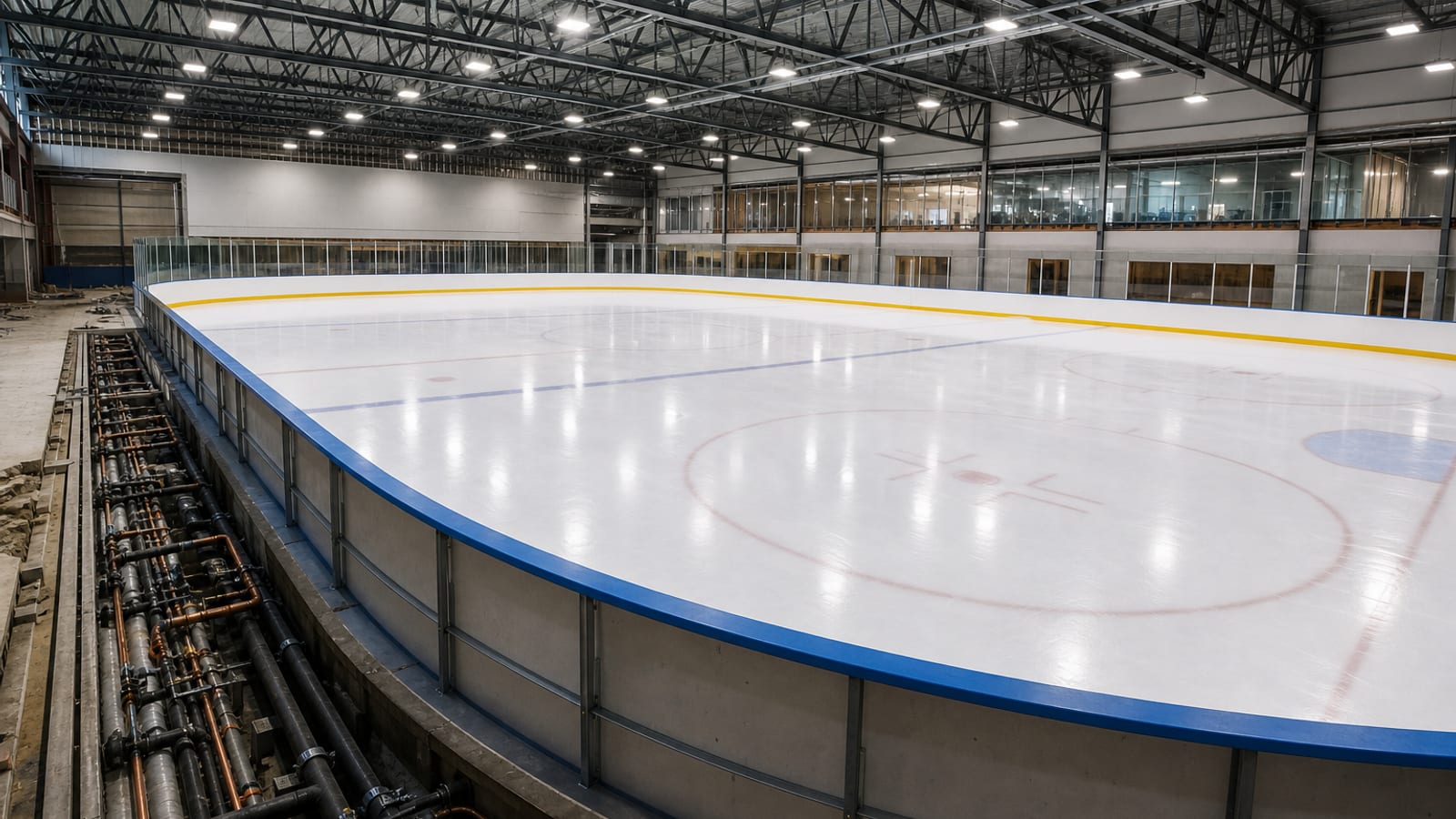
An NHL ice rink is 200 feet long and 85 feet wide (60.96 × 25.91 meters). A traditional Olympic-size sheet is 60 × 30 meters, about 197 × 98 feet, but international hockey rules allow widths from 26 to 30 meters. Public skating and backyard rinks can be smaller, so there is no single size for every ice rink.
The dimensions below describe the skating surface inside the boards, not the entire building.
Ice Rink Dimensions in Feet and Meters
| Rink type | Length × width in feet | Length × width in meters | What the size means |
|---|---|---|---|
| NHL hockey | 200 × 85 ft | 60.96 × 25.91 m | NHL regulation dimensions |
| IIHF international hockey | About 196.9 × 85.3–98.4 ft | 60 × 26–30 m | A permitted width range, not one fixed size |
| ISU figure skating: preferred maximum | About 196.9 × 98.4 ft | 60 × 30 m | Preferred dimensions under Rule 342 |
| ISU figure skating: minimum | About 183.7 × 85.3 ft | 56 × 26 m | Minimum dimensions under Rule 342 |
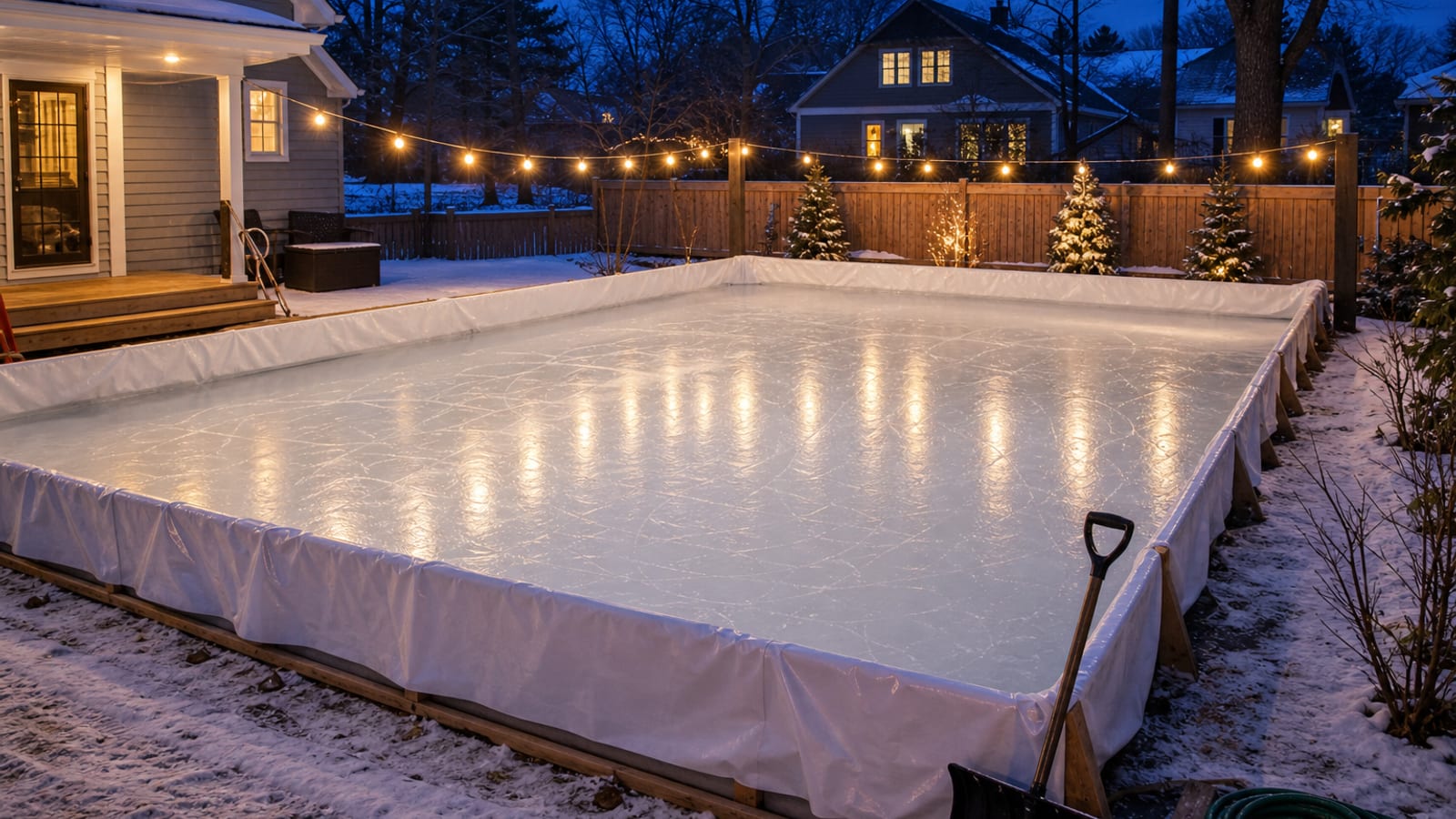
| Backyard example | 48 × 24 ft | About 14.63 × 7.32 m | A kit example, not a sport-wide standard |
Official references: NHL 2026–27 Rule 1.2, IIHF 2026–27 Rule 1.2, and ISU 2026 figure skating Rule 342. The backyard example comes from NiceRink’s 24 × 48 ft configuration.
NHL vs. Olympic Size: What Is the Difference?
Compared with an NHL rink, a 60 × 30 m sheet is about 3.1 feet shorter and 13.4 feet wider. The biggest visible difference is the width.
However, “Olympic size” is not enough information to identify an international hockey rink’s dimensions. The current IIHF rule permits a 60 m length and widths between 26 and 30 m, with deviations requiring IIHF approval. Check the particular venue or event specification before assuming its ice is 30 m wide.
NHL corners use a 28 ft radius. IIHF corners use a radius between 7 and 8.5 m. The rounded ends matter when calculating the actual ice area.
How Many Square Feet Is an Ice Rink?
Multiplying the full length by the width gives the rectangular footprint:
| Example | Length × width calculation | Rectangular footprint |
|---|---|---|
| NHL | 200 × 85 ft | 17,000 sq ft |
| 60 × 30 m sheet | 60 × 30 m | 1,800 sq m, about 19,375 sq ft |
| 60 × 26 m sheet | 60 × 26 m | 1,560 sq m, about 16,792 sq ft |
| 24 × 48 ft backyard example | 24 × 48 ft | 1,152 sq ft |
The real skating surface is smaller when the corners are rounded. For an NHL outline with four 28 ft quarter-circle corners, the geometry gives approximately 16,327 sq ft of ice. That is why a quoted “17,000-square-foot rink” is a useful footprint figure, but not the exact ice area.
For rounded rectangular rinks, the calculation is:
Ice area = length × width − (4 − π) × corner radius²
Use the same units throughout. Neither figure includes the boards, seating or rooms around the ice.
How Big Is a Figure Skating Rink?
ISU Rule 342 specifies a rectangular skating area, preferably 60 × 30 m, no larger than that and no smaller than 56 × 26 m. This rule covers single and pair skating and ice dance; it is separate from the NHL hockey standard. Source: ISU figure skating sports rules.
A local arena may use the same sheet for hockey, lessons, figure skating and public sessions. The activity on the schedule does not by itself tell you the dimensions.
Public Skating and Backyard Rink Sizes
A public skating session describes access to the ice, not an official size category. It might use a full hockey sheet, a smaller practice surface or a seasonal installation. Ask the venue for its actual dimensions if size matters to your visit or event.
Backyard rinks are sized around the available site and intended use. NiceRink’s builder includes a 24 × 48 ft option and a custom-size choice. That is a manufacturer example rather than evidence of an average backyard rink. For planning considerations, see our home ice rink guide.
When comparing kits, distinguish the ice dimensions from the liner dimensions. A liner needs material for the sides as well as the base; its advertised size is not automatically the usable skating area.
Ice Size vs. Building Size
The arena footprint also needs space for access around the rink, mechanical equipment, rentals, changing rooms and any seating. There is no reliable universal multiplier that turns ice area into a complete building size.
If you are evaluating a facility or construction plan, request:
- The finished ice dimensions and corner radius.
- The outside dimensions of the boards and supporting structure.
- A floor plan showing circulation, seating and service spaces.
- The dimensions required by the intended sport and event organizer.
For a casual visit, the session schedule, crowd level and beginner facilities are often more useful than the regulation size. Find a skating rink near you and check its official website before traveling.
Frequently Asked Questions
How big is a standard NHL ice rink?
An NHL rink is 200 × 85 feet, or approximately 60.96 × 25.91 meters, with 28-foot-radius rounded corners.
Is an Olympic ice rink bigger than an NHL rink?
A 60 × 30 m sheet is wider and slightly shorter than an NHL rink. International hockey rules also allow narrower 60 × 26 m sheets, so check the event’s actual dimensions.
Is an NHL rink exactly 17,000 square feet?
Its length multiplied by width is 17,000 square feet. Accounting for the rounded corners gives approximately 16,327 square feet of skating surface.
Are all public ice skating rinks the same size?
No. Public skating can take place on competition-size sheets, smaller practice rinks or seasonal installations. The venue can confirm the size of its ice.